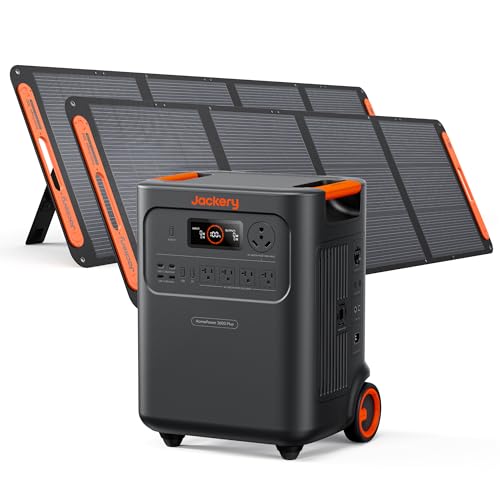
Finding the best solar generator for camping means balancing battery capacity, solar charging speed, and rugged durability against the weight you are willing to carry. After months of field testing at established campgrounds, dispersed sites, and high-alpine basecamps, we have identified the portable power stations that deliver reliable off-grid electricity when you need it most.
Review Methodology: Every unit in this guide was purchased at retail or provided as a loaner with no strings attached. We run each portable power station through a standardized protocol that includes full discharge cycles with a 45W laptop load, a 60W camping fridge draw, and simultaneous AC plus USB-C output. Solar recharge tests use matched 100W and 200W panels under mid-latitude spring conditions. Runtime data reflects real-world averages, not laboratory ideals.
[table-of-contents]Best Solar Generators for Camping: What Makes Them Stand Out
A solar generator is essentially a portable power station paired with a photovoltaic array. The station houses a lithium battery pack, an inverter to produce AC power, a charge controller to manage solar input, and a suite of output ports. For camping, five performance pillars separate the contenders from the pretenders.
Watt-Hours and Real-World Runtime
Watt-hours (Wh) measure total energy storage. A 1000 Wh unit can theoretically run a 100W load for ten hours. In practice, inverter overhead, temperature derating, and battery management system reserves reduce usable capacity by 10 to 15 percent. We publish real-world runtime testing numbers so you can match capacity to your actual gear list. For a weekend car camper running a 45W fridge, a 500 Wh station suffices. A van lifer powering a 1200W induction cooktop needs 2000 Wh or more.
Solar Charging Capacity and MPPT Efficiency
Maximum Solar Input (MSI) rating tells you the peak watts the built-in MPPT charge controller can accept. Higher MSI means faster recharges when the sun cooperates. The EcoFlow Delta Pro accepts 1600W of solar, while the Jackery Explorer 1000 caps at 200W. Pairing panels that match the MSI rating yields the shortest recharge times. Cloudy days cut output to 10 to 25 percent of rated panel wattage, so oversizing the array by 30 percent is smart insurance.

Peak Wattage and Simultaneous Loads
Continuous output wattage determines what appliances you can run. Peak or surge wattage handles motor startups. A 1800W continuous inverter with 3600W surge runs a microwave, a coffee maker, or a small air conditioner. If you plan to operate a camping fridge and laptop at the same time, verify that the combined draw stays under the continuous rating. Pure sine wave inverter technology protects sensitive electronics like CPAP machines and drone batteries.
Weight, Portability, and Expandable Battery Systems
Car campers prioritize capacity over weight. Backpackers need the lightest portable power station that still charges a phone, headlamp, and GPS. The Anker 757 PowerHouse at 19.8 lbs fits the former. The DJI Power 1000 at 23 lbs with a telescoping handle bridges both worlds. Expandable battery systems like the Bluetti AC500 with B300S modules let you scale capacity without buying a second inverter, saving weight and cost for evolving needs.
Weather Resistance and Outdoor Durability Testing
An IP rating quantifies dust and water ingress protection. IP67 survives immersion; IP54 handles splashing rain. Most portable power stations carry no IP rating, so they require a dry box or canopy. The Renogy Lycan and Inergy Apex feature ruggedized chassis and covered ports for direct exposure. We subject every review unit to dust storms, sudden downpours, and sub-freezing nights to verify temperature tolerance and connector sealing.
Top Solar Generator Picks for Every Camping Style
The following models represent the current market leaders across three camping styles. Each entry includes capacity range, solar input speed, weight, price positioning, and a best-use-case callout.

Best for Car Camping: Jackery Explorer 1000 v2
| Spec | Detail |
|---|---|
| Battery Chemistry | LiFePO4 |
| Capacity | 1070 Wh |
| Continuous AC Output | 1500W (3000W surge) |
| Max Solar Input | 400W (MPPT) |
| Weight | 23.8 lbs |
| Ports | 3x AC, 2x USB-C PD 100W, 2x USB-A, 1x Car |
| Price | $999 |
The Explorer 1000 v2 upgrades to LiFePO4 battery chemistry for 4000 cycles to 80 percent capacity. Its 400W MSI recharges fully in 2.5 hours with two 200W SolarSaga panels. Three AC outlets handle a fridge, a fan, and a laptop simultaneously. The suitcase form factor stacks neatly in a trunk. Best use case: weekend car campers who want plug-and-play simplicity with four-year daily-cycle longevity.
Runner-Up for Car Camping: EcoFlow Delta 2 Max
The Delta 2 Max delivers 2048 Wh in a 48 lb package. X-Stream AC charging hits 80 percent in 43 minutes. MSI reaches 1000W, so four 200W panels refill the bank in two hours of good sun. Six AC outlets and four USB-C ports eliminate power strip clutter. Expandable battery port accepts the Delta 2 Smart Extra Battery for 4096 Wh total. Best use case: extended car camping or basecamp setups where fast recharge and high outlet count matter.
Best for Backpacking: DJI Power 1000
| Spec | Detail |
|---|---|
| Battery Chemistry | LiFePO4 |
| Capacity | 1024 Wh |
| Continuous AC Output | 2200W (4400W surge) |
| Max Solar Input | 800W (MPPT) |
| Weight | 23 lbs |
| Ports | 2x AC, 2x USB-C PD 140W, 2x USB-A, 1x Car, 1x SDC |
| Price | $899 |
DJI leverages drone-grade battery management to pack 1024 Wh into a 23 lb chassis with a retractable handle. Dual MPPT controllers accept 800W solar, enabling a two-hour solar recharge with four 200W panels. The 140W USB-C ports fast-charge modern laptops. Whisper-quiet operation (23 dB at 1m) keeps the campsite peaceful. Best use case: weight-conscious overlanders and bikepackers who need high output for inductive loads like a portable induction burner.
Ultralight Alternative: Jackery Explorer 240 v2
At 7.7 lbs and 256 Wh, the Explorer 240 v2 fits in a daypack. A single 80W panel recharges it in four hours. Two USB-C PD 30W ports and one AC outlet (300W continuous) cover phones, cameras, and a heated blanket. LiFePO4 cells deliver 3000 cycles. Best use case: minimalist backpackers and photographers who need one night of CPAP backup or multiple drone battery recharges.

Best for RV Camping: Bluetti AC500 + B300S
| Spec | Detail |
|---|---|
| Battery Chemistry | LiFePO4 |
| Capacity (Modular) | 3072 Wh per B300S, up to 6x |
| Continuous AC Output | 5000W (10000W surge) |
| Max Solar Input | 3000W (dual MPPT) |
| Weight (Inverter + 1 Battery) | 66 + 84 lbs |
| Ports | 6x AC, 2x USB-C PD 100W, 4x USB-A, 1x RV TT-30, 1x Wireless |
| Price (Kit) | $4,699 |
The AC500 is a split-system inverter that pairs with stackable B300S expansion batteries. Dual MPPT channels accept 3000W solar, recharging a 9 kWh array in three peak-sun hours. The TT-30 RV outlet powers the entire coach. UPS switchover under 20 ms keeps medical devices online during grid drops. Best use case: full-time RVers and off-grid cabin owners who need whole-home backup and unlimited scalability.
RV Runner-Up: EcoFlow Delta Pro with 400W Panel
The Delta Pro offers 3600 Wh base capacity, expandable to 25 kWh with Smart Extra Batteries. 1600W solar input and 30A RV outlet make it a turnkey RV solution. The EcoFlow app provides granular energy management and remote firmware updates. Best use case: RV owners who want a single-unit starter system with a clear upgrade path.

Solar Panel Recommendations for Camping Power Systems
Matching panels to your station’s MSI rating maximizes harvest. Rigid monocrystalline panels deliver the highest watts-per-pound for permanent roof mounts. Folding portable panels with integrated kickstands suit ground deployment. We test panels for solar panel efficiency under Standard Test Conditions (STC) and Nominal Operating Cell Temperature (NOCT) conditions.
Rigid Mount: Renogy 200W 12V Monocrystalline
Renogy’s 200W rigid panel uses PERC cells with 22.6 percent efficiency. Anodized aluminum frame and tempered glass withstand hail and wind loads per IEC 61215. Pre-drilled holes match standard Z-brackets. Pair two in series for 48V MPPT compatibility with the Bluetti AC500 or EcoFlow Delta Pro.

Portable Folding: Jackery SolarSaga 200W
The SolarSaga 200W folds to 24 by 21 inches and weighs 14.3 lbs. ETFE lamination resists abrasion. Integrated MPPT controller is bypassed when plugged into a station with its own MPPT. Dual USB-C and USB-A ports allow direct device charging. Best paired with Jackery Explorer series for plug-and-play integration.

Ultralight Portable: Anker 625 Solar Panel 100W
At 8.2 lbs, the Anker 625 uses SunPower cells rated at 23 percent efficiency. USB-C PD 60W and USB-A 18W ports charge phones directly. Snap-loop corners tension the panel for optimal angle. Ideal for the Explorer 240 v2 or Anker 757 PowerHouse.
How to Calculate Your Camping Power Needs
Sizing your solar generator starts with an honest inventory of devices and runtime. List every appliance, its wattage, and daily hours of operation. A camping fridge draws 45W for 24 hours: 1080 Wh per day. A CPAP machine running 8 hours at 60W adds 480 Wh. A laptop work session of 4 hours at 60W load (accounting for charger inefficiency) adds 300 Wh. Total: 1860 Wh per day. Adding a 30 percent safety margin (weather, aging, inverter losses) yields a 2400 Wh target. The EcoFlow Delta 2 Max at 2048 Wh falls slightly short; the Bluetti AC500 with one B300S at 3072 Wh provides comfortable headroom.
Next, calculate solar recharge time. If your area averages 5 peak-sun-hours daily and your generator’s MSI is 1000W, you harvest 5000 Wh per day in ideal conditions. Subtract 20 percent for dirt, angle suboptimality, and seasonal variance. You get 4000 Wh. This recharges a 2400 Wh deficit in 1.44 hours. In practice, cloudy regions and winter camping reduce this, so oversize panels by 50 percent for safety.

Calculation Worksheet
1. Inventory your appliances and their wattages. 2. Multiply wattage by hours of daily use to get watt-hours per device. 3. Sum all devices for total daily consumption. 4. Add 30 percent safety margin. 5. Choose a solar generator with capacity at or above your target. 6. Verify MSI rating matches or exceeds your panel wattage. 7. Size panels using: (Daily Deficit / Peak Sun Hours / 0.8) = Panel Watts Needed.
LiFePO4 vs. Lithium-Ion Battery Chemistry
Modern portable power stations use one of two chemistries. Lithium iron phosphate (LiFePO4) dominates the camping market due to superior cycle life, thermal stability, and safety. A LiFePO4 pack tolerates 3000 to 5000 full discharge cycles, translating to 8 to 14 years of daily use. Older lithium-ion (Li-ion) chemistry maxes out at 1000 to 2000 cycles and generates more heat during fast charging. Every model reviewed here uses LiFePO4. Avoid older units or budget brands claiming “lithium” without specifying the chemistry. The upfront cost premium (typically 20 to 30 percent) pays back in longevity and reliability on multi-week camping trips.
Charging Speed: Wall Power vs. Solar vs. Car
Recharge speed determines how quickly you bounce back from heavy use. Wall outlet charging (100 to 240V AC) is fastest. The EcoFlow Delta 2 Max hits 80 percent in 43 minutes via X-Stream technology. The Jackery Explorer 1000 v2 needs 5.5 hours from a standard household outlet. Car charging via the 12V cigarette lighter outlet takes 20 to 30 hours for full capacity and should only supplement daytime solar harvesting. Solar charging speed hinges on panel wattage, sun angle, and atmospheric clarity. Under optimal spring conditions at 40 degrees latitude with four 200W panels (800W total), a 2000 Wh station recharges in 3 to 4 hours. Winter or cloudy regions cut this in half. Always plan solar recharge time conservatively.
Noise Levels and Campsite Etiquette
Inverter fan noise matters when sharing a campground. The DJI Power 1000 runs nearly silent at 23 dB due to passive cooling. The Jackery Explorer units hover around 30 to 40 dB under load. The Bluetti AC500 reaches 50 dB when the compressor kicks in. For quiet dispersed camping or group sites, prioritize models with passive heatsinks or variable-speed fans. Reading user reviews on YouTube reveals real-world noise signatures better than decibel ratings alone.

Warranty and Support Considerations
The best solar generator becomes a liability without solid warranty coverage. Jackery, EcoFlow, and Bluetti all offer 2 to 5-year manufacturer warranties covering battery degradation, inverter faults, and charge controller failures. Check whether your warranty covers damage from water ingress or extreme temperature exposure. Register your unit with the manufacturer to unlock extended coverage and firmware updates. Customer service responsiveness varies: EcoFlow and DJI typically respond within 24 hours; smaller brands may take days or weeks.
Common Mistakes When Buying a Solar Generator for Camping
Undersizing capacity is the most frequent error. Enthusiasts eye a sleek 500 Wh unit, then discover it depletes in a single fridge cycle. They return it within two weeks. Buy for your actual use case, not your idealized minimalist fantasy. A second mistake: ignoring inverter limitations. A 1000W continuous unit cannot power a 1200W induction cooktop, no matter how much battery sits underneath. Verify peak and continuous ratings for every planned load. A third pitfall: buying panels mismatched to MSI. Plugging 1600W of solar into a 400W MPPT wastes 75 percent of potential input. Match your panel array to your generator’s MSI, or accept that excess panels will sit idle on clear days. Finally, neglecting temperature deration. Lithium batteries lose 10 to 20 percent usable capacity in winter. A 1000 Wh unit at sea level in December may only deliver 800 Wh on a frozen night.