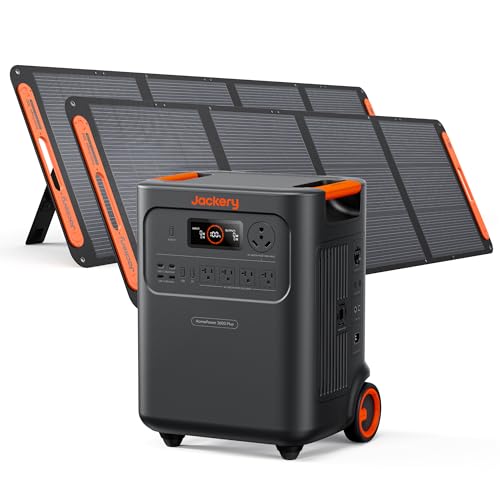
How Does a Portable Power Station Work?
If you have ever wondered how does a portable power station work, you are not alone. These compact units have become essential gear for campers, van lifers, and anyone preparing for grid outages. At first glance they look like a heavy box with outlets. Inside there is a carefully engineered system that stores direct current energy, converts it to alternating current, and protects every component from damage. This guide breaks down each major subsystem so you can understand what you are buying and how to get the most life out of it.
Review Methodology: Our team at Outdoor Power Reviews tests every unit in real world conditions. We run continuous load tests, verify pure sine wave output with an oscilloscope, measure solar charging efficiency under varying irradiance, and cycle batteries to confirm rated capacity. We do not rely on manufacturer spec sheets alone.
[table-of-contents]How Does a Portable Power Station Work: The Four Core Systems
Every portable power station, regardless of brand or size, shares four core subsystems that answer the question of how does a portable power station work. The battery pack stores energy as direct current. The battery management system monitors cell health and enforces safety limits. The inverter converts stored direct current into alternating current for household devices. The charge controller regulates incoming power from wall outlets, car adapters, or solar panels. Understanding how these pieces interact is the key to understanding how portable power stations function and deliver reliable off-grid power.
The Battery Pack: Storing Your Power
Cell Chemistry: Lithium Iron Phosphate Versus Lithium Ion
Modern stations almost exclusively use lithium-based chemistries. The two dominant types are lithium iron phosphate (LiFePO4) and traditional lithium ion (often NMC or NCA). Lithium iron phosphate cells offer longer cycle life, typically 2,000 to 6,000 cycles to 80 percent capacity, better thermal stability, and a flatter voltage curve. Traditional lithium ion packs are lighter for the same watt hour rating but degrade faster and are more prone to thermal runaway if punctured or overheated. For stationary off-grid use, LiFePO4 is the superior choice. For weight-critical backpacking, some users still prefer high energy density lithium ion.
Watt Hours and Depth of Discharge
Capacity is rated in watt hours (Wh). A 1,000 Wh pack can theoretically deliver 1,000 watts for one hour or 100 watts for ten hours. However, usable energy is governed by depth of discharge (DoD). Most manufacturers limit DoD to 80 or 90 percent to protect cycle life. That means a 1,000 Wh unit with 90 percent DoD gives you 900 Wh of real world runtime. Pushing deeper discharges repeatedly shortens battery longevity dramatically.

Cell Balancing and Voltage Regulation
A battery pack contains dozens of individual cells wired in series and parallel. Small manufacturing variances cause cells to charge and discharge at slightly different rates. Without correction, the weakest cell hits its voltage limit first, cutting off the entire pack. The BMS runs a cell balancing algorithm during charging to bleed excess voltage from higher cells or shunt current around them. This keeps the pack balanced and maximizes usable capacity over hundreds of cycles.
Thermal Management and Cold Weather Performance
Lithium chemistry loses capacity in cold temperatures. Below freezing, the internal resistance spikes, reducing available power and slowing charge acceptance. Quality stations include a low temperature cutoff protection that pauses charging until the pack warms. Some larger units integrate heating elements that draw a small amount of stored energy to bring cells into the optimal operating window. In hot conditions, a thermal cut-off mechanism shuts down output if pack temperature exceeds safe limits, usually around 60 degrees Celsius. Passive cooling via aluminum heat spreaders and active fans are common thermal management strategies.
The Battery Management System: The Guardian of Your Power
The battery management system (BMS) is the brain that keeps the lithium battery pack safe and efficient. It performs three critical functions. First, it monitors voltage, current, and temperature at the cell level and pack level in real time. Second, it enforces hard limits, disconnecting the pack if any parameter exceeds safe thresholds. Third, it communicates state of charge and health data to the user display and mobile app.
Protection Layers That Prevent Damage
- Over voltage protection during charging
- Under voltage protection during discharge
- Over current protection for both charge and discharge
- Short circuit protection on the main output bus
- Over temperature and under temperature cutoffs
These protections operate in microseconds. If you accidentally short the AC outlet, the BMS cuts power before the inverter transistors can fail. This layer of safety is why reputable stations can be used by non-technical users without fear of catastrophic battery failure.

State of Charge Estimation: Reading Your Battery Accurately
Because lithium voltage curves are flat, especially LiFePO4, the BMS cannot rely on voltage alone to estimate remaining capacity. It uses coulomb counting, integrating current over time, combined with periodic voltage calibration at full and empty states. This yields the percentage you see on the screen. Accuracy is typically within 2 to 3 percent on quality units.
The Inverter: Converting DC Power to Household AC
DC to AC Conversion Basics
The battery stores direct current at a nominal voltage, usually 12V, 24V, or 48V depending on pack configuration. Household appliances require alternating current at 120V, 60Hz in North America or 230V, 50Hz elsewhere. The inverter bridges this gap. It uses high frequency switching transistors (MOSFETs or IGBTs) to chop the DC into a high frequency AC waveform, then steps up voltage through a transformer or transformerless topology, and finally filters the waveform to match grid quality.
Pure Sine Wave Versus Modified Sine Wave
A pure sine wave inverter produces a smooth sinusoidal output identical to utility power. This is essential for sensitive electronics like laptops, medical devices (CPAP machines), variable speed motors, and audio equipment. A modified sine wave inverter approximates the sine wave with a stepped square wave. It is cheaper to build but causes audible buzz in audio gear, overheating in inductive loads, and can damage devices with active power factor correction circuits. Every station we recommend uses a pure sine wave inverter. The price premium is small and the compatibility benefit is massive.
Surge Rating and Continuous Power Output
Inverters have two power ratings. Continuous power is the load you can run indefinitely until the battery empties. Surge power (often 2x continuous for a few seconds) handles startup spikes from compressors or power tools. A 1,000W continuous, 2,000W surge inverter can start a 700W microwave but cannot run a 1,500W space heater continuously. Always match the continuous rating to your sustained load.

Standby Power Draw and Efficiency Loss
Even with no load, the inverter consumes energy to maintain the AC waveform and keep its control circuitry alive. This standby draw ranges from 5W to 30W depending on design. Over 24 hours, a 20W standby draw consumes 480Wh, nearly half a typical 1,000Wh pack. Turning off the AC output when not in use preserves significant runtime. Some units have an eco mode that powers down the inverter after a period of no load.
The Charge Controller: Managing Incoming Power
MPPT Versus PWM Solar Controllers
Solar charging relies on a charge controller to match panel output to battery voltage. Maximum power point tracking (MPPT) controllers continuously sweep the panel voltage current curve to find the maximum power point, extracting up to 30 percent more energy than pulse width modulation (PWM) controllers, especially in cold or partially shaded conditions. PWM controllers simply pull the panel voltage down to battery voltage, wasting excess potential. Every modern portable power station worth buying uses MPPT technology for optimal solar efficiency.
Solar Input Voltage Range and Array Sizing
Each station specifies a solar input voltage range, for example 12V to 60V. Your panel array open circuit voltage must stay within this window. Series wiring increases voltage; parallel wiring increases current. Exceeding the maximum voltage can damage the controller. Undervolting reduces charging speed. We recommend configuring arrays to operate near the middle of the allowed range for best MPPT efficiency and reliable performance in varying conditions.
Why Solar Charges Slower Than Wall Power
Wall outlets deliver consistent 120V or 230V at up to 15A, giving 1,800W to 3,000W of potential input. A typical portable station limits AC input to 500W to 1,500W via its internal AC-to-DC converter. Solar panels rarely exceed 200W to 400W per port, and real world irradiance losses (angle, temperature, shading) cut that further. Physics dictates solar will always be slower than grid charging. Plan your charging windows and battery capacity accordingly if relying on solar as your primary charging method.

Putting It All Together: System Integration and Daily Use
Input Output Port Architecture and Current Management
A station typically offers AC outlets, USB-A, USB-C (often supporting USB Power Delivery up to 100W), 12V car socket, and sometimes Anderson Powerpole or XT60 connectors for high current DC. The BMS manages current limits on each port independently. The inverter handles AC output. DC-to-DC converters step down pack voltage for USB and 12V outputs. Load balancing algorithms prevent exceeding total system current limits when multiple ports draw power simultaneously. This distributed architecture allows you to charge multiple devices and run AC appliances at the same time without tripping internal breakers.
Real World Power Flow During Operation
When you plug in a laptop via USB-C, the BMS routes current directly from the battery through a buck converter that reduces voltage from 48V to 20V at the appropriate wattage. When you plug in an air fryer, current flows through the same battery to the inverter, which converts it to 120V AC. The BMS tracks both draws against its total power budget and enforces limits if either path would exceed safe transistor ratings. This happens in real time, thousands of times per second, with no user intervention required.
Priority and Load Shedding Behavior
Most systems prioritize AC output over low voltage DC ports when approaching current limits. Some stations implement load shedding, automatically disconnecting USB ports if AC load spikes above a threshold. Understanding your specific station’s behavior prevents frustration when running multiple high power devices. Review the manual for your unit’s current limits and port priority hierarchy.
Efficiency Losses: Where Energy Goes
No energy conversion is 100 percent efficient. A full cycle from solar to battery to AC appliance loses roughly 20 to 30 percent due to controller losses (85 to 90 percent), inverter losses (90 to 95 percent), and wiring resistance. Wall charging losses are lower at 10 to 15 percent since the AC-to-DC conversion happens in the station rather than the solar controller. USB charging via built-in buck converters adds another 5 percent loss. Plan for a 1,500Wh pack to deliver around 1,050 to 1,200Wh of usable AC power accounting for depth of discharge and conversion losses.

Frequently Asked Questions
Can I use a portable power station while it is charging?
Yes. Modern stations support pass-through charging where simultaneous input and output are possible. The BMS prioritizes charging, but if the charger delivers more than the load consumes, excess energy goes to the battery. If the load exceeds charger output, the station draws from the battery. There is no risk in dual operation; the BMS handles load balancing automatically.
How long do portable power stations last?
LiFePO4 stations typically retain 80 percent of capacity after 2,000 to 6,000 charge cycles, which equates to 5 to 15 years of typical use. Lithium ion stations degrade faster, retaining 80 percent capacity after 500 to 1,500 cycles or 2 to 7 years. Actual longevity depends on depth of discharge, temperature, and charging frequency. Keeping batteries between 20 and 80 percent state of charge extends lifespan significantly.
What is the difference between a portable power station and a solar generator?
A portable power station is the battery and inverter system alone. A solar generator is a portable power station bundled with solar panels. The terminology is interchangeable in marketing materials, but the key difference is whether solar charging capability is included in the package. Both operate on identical principles once charged.
Can a portable power station power a refrigerator?
Most compact stations cannot run a refrigerator continuously due to surge current and runtime constraints. A typical refrigerator draws 600W startup surge and 150W to 200W continuous. Even a 2,000Wh station with 2,000W surge rating can only power it for 10 to 13 hours. Larger 5,000Wh or 10,000Wh units are more practical for fridge applications on extended trips.

Is it safe to leave a portable power station plugged in overnight?
Yes. Quality stations have overcharge protection built into the BMS. Once the battery reaches 100 percent charge, the charge controller disconnects and no more current flows. Leaving a station plugged in poses no risk to the battery. However, AC standby draw continues consuming energy, so disconnect the wall charger when not actively charging to preserve stored capacity.
Key Takeaways on How Portable Power Stations Work
Understanding how a portable power station works demystifies this essential off-grid tool. At its core, the system converts stored chemical energy (battery) into the form you need (AC or DC) while protecting itself and your devices through intelligent monitoring (BMS). The inverter is the bridge that allows you to use any 120V appliance anywhere. The charge controller optimizes input from multiple sources. Together these systems create a resilient power platform for camping, van life, emergency backup, and remote work. When evaluating which portable power station to buy, prioritize LiFePO4 chemistry, pure sine wave inverters, MPPT solar controllers, and realistic power ratings matched to your actual loads. Quality construction and legitimate testing data from independent reviewers beat flashy marketing claims every time.
Related Resource: For detailed specifications on portable power station chemistry and performance, see Battery University’s guide to battery management systems, an authoritative source on lithium ion and LiFePO4 technology.