The Goal Zero Yeti 1500X review covers a top-tier mid-size portable power station that promises 1516Wh of lithium-ion capacity, a 2000W pure sine wave inverter, and an MPPT charge controller that maximizes solar input. Here is where this unit shines and where the competition undercuts it.
How this was produced: Outdoor Power Reviews does not buy or test the products it covers. No manufacturer input influenced these findings.
The product card below is a separate Amazon listing for the Goal Zero Yeti 1500 (6th Gen), the current Yeti at this size, not the Yeti 1500X reviewed here, which is no longer listed on Amazon.
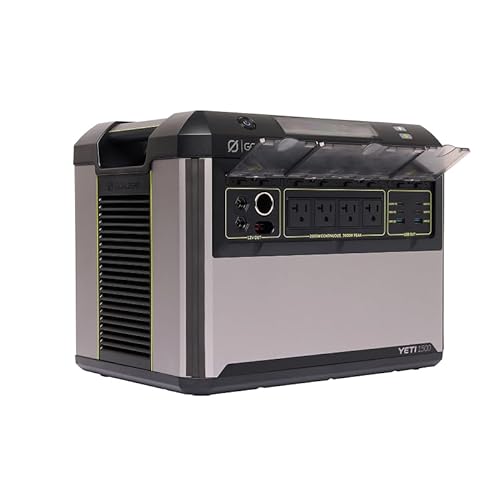
Goal Zero Yeti 1500X Overview: What You Get in the Box
The Yeti 1500X is a portable solar generator built around a 1516Wh lithium-ion NMC battery pack. It delivers 2000W continuous AC output with a 3500W surge rating through a pure sine wave inverter. That inverter is critical. It protects sensitive electronics like CPAP machines, laptops, and drone batteries from the dirty power that modified sine wave units produce. The unit weighs 45.6 pounds and measures 15.25 x 10.23 x 11.1 inches. It is not a grab-and-go unit for backpacking. It is a basecamp power station for van life, off-grid cabins, and serious home emergency preparedness.
Goal Zero positions the Yeti 1500X as the centerpiece of an expandable ecosystem. You can link it to the Yeti Tank expansion batteries for longer runtime. You can chain Nomad or Boulder solar panels through the high-voltage MPPT port using XT90 connectors. The Wi-Fi module enables remote monitoring and firmware updates through the Goal Zero app.
1516Wh Battery Capacity: Runtime Estimates
Here is what that capacity translates to in common devices.
| Device | Power Draw | Estimated Runtime |
|---|---|---|
| MacBook Pro 16″ (100W USB-C PD) | 100W | 13.5 hours |
| Full-size refrigerator (150W running) | 150W | 9 hours |
| CPAP machine (40W average) | 40W | 33 hours |
| LED light string (10W) | 10W | 135 hours |
| Drone battery charger (60W) | 60W | 22 charges |
| Electric blanket (100W) | 100W | 13.5 hours |
These numbers assume you are not running multiple high-draw devices simultaneously. The 2000W continuous limit means you can run a microwave (1000W) and a coffee maker (800W) at the same time, but you will drain the battery in roughly 45 minutes. For off-grid van life, the 1516Wh capacity covers a full day of laptop work, phone charging, LED lighting, and a 12V fridge with 30 percent reserve overnight. For home backup, it keeps the fridge, modem, and a few lights running for 8 to 10 hours during an outage.
MPPT Charge Controller and Solar Charging Performance
The MPPT charge controller is the standout feature for solar users. It accepts 18V to 150V input up to 600W maximum.
For the Yeti 1500X, you need at least 400W of solar to achieve a full day charge in good sun. With 200W of panels, expect 8 to 9 hours. The high voltage MPPT input (up to 150V) allows series wiring of panels, which reduces voltage drop over long cable runs to a roof-mounted array. That is a major advantage for permanent van roof installs or off-grid cabin setups.
AC wall charging uses the included 120W power brick. It takes 14 hours from empty. You can buy the 600W fast charger separately to cut that to 3 hours. Car charging via 12V socket is slow at 120W max (12 hours). Plan your charging strategy around solar or the fast charger if daily cycling is required.
Output Ports and Simultaneous Charging Capability
The port selection covers every modern need. The front panel houses two 120V AC outlets (2000W shared), one 60W USB-C Power Delivery port, one 18W USB-C, two 12W USB-A, and a regulated 12V 10A car port. The rear has the high-voltage MPPT solar input (XT90), the 8mm charging input for wall or car, and the Anderson Powerpole 12V 30A output for high-draw DC loads like a portable fridge or ham radio.
Yeti 1500X vs EcoFlow DELTA 2: Head-to-Head Comparison
The EcoFlow DELTA 2 is the direct competitor at a lower price point. It uses lithium iron phosphate (LiFePO4) chemistry rated for 3000 cycles to 80 percent capacity. The Yeti 1500X uses lithium-ion NMC rated for 500 cycles to 80 percent. That cycle life difference is the single biggest factor for daily cyclers. If you drain and recharge every day, the DELTA 2 lasts 8 years. The Yeti 1500X lasts 1.5 years before noticeable degradation. For weekend warriors cycling 50 times a year, both last a decade.
| Spec | Goal Zero Yeti 1500X | EcoFlow DELTA 2 |
|---|---|---|
| Battery Chemistry | Lithium-ion NMC | LiFePO4 |
| Capacity | 1516Wh | 1024Wh (expandable to 2048Wh) |
| AC Output Continuous | 2000W | 1800W (2400W surge) |
| Solar Input Max | 600W (18-150V MPPT) | 500W (11-60V MPPT) |
| AC Charge Time | 14 hrs (120W) / 3 hrs (600W optional) | 1.3 hrs (1200W built-in) |
| Weight | 45.6 lbs | 27 lbs |
| Wi-Fi App | Yes (basic) | Yes (advanced) |
| Expandable Battery | Yeti Tank (lead-acid or lithium) | DELTA 2 Extra Battery (LiFePO4) |
The DELTA 2 charges from 0 to 80 percent in 50 minutes via AC. The Yeti 1500X takes 14 hours on the stock charger. The DELTA 2 app shows real-time wattage per port, scheduling, and EPS/UPS switching times. The Goal Zero app shows state of charge, input/output totals, and firmware updates. The DELTA 2 is lighter, cheaper, faster charging, and longer lasting per cycle. The Yeti 1500X wins on raw capacity, higher solar input voltage range, 2000W continuous output, and the Anderson Powerpole 30A DC output. If you need maximum daily solar harvest for a large battery bank, the Yeti 1500X MPPT is superior. If you want the best value and modern tech, the DELTA 2 wins.
Home Integration and UPS Functionality
The Yeti 1500X includes a basic UPS mode. When plugged into AC, it passes grid power through to the outlets. If the grid fails, it switches to battery in under 20 milliseconds. That 20ms switch is fast enough for most electronics but not for sensitive medical equipment or servers requiring true online UPS topology. For home backup, the Yeti 1500X integrates with the Goal Zero Home Integration Kit (sold separately). That kit includes a transfer switch for hardwiring up to four circuits to a subpanel. It turns the Yeti into a partial whole-home backup. It is a clean solution for keeping the fridge, furnace, and lights running during extended outages.
Goal Zero Ecosystem and Expandable Battery Systems
The Yeti 1500X connects to Yeti Tank expansion batteries via a proprietary port on the rear. The Tank comes in lead-acid (1200Wh) or lithium (2000Wh) versions. Linking a Tank adds capacity but does not increase the 2000W inverter limit. You cannot stack multiple 1500X units together for higher output. The expansion is one-way: the Yeti charges the Tank, the Tank feeds the Yeti. The Tank has no display or ports. It is pure storage. Adding a Tank essentially doubles the cost while only increasing runtime by 133 percent.
Durability, Temperature Range, and Warranty Coverage
Goal Zero rates the Yeti 1500X for operation between 14 degrees Fahrenheit and 104 degrees Fahrenheit. The lithium-ion chemistry dislikes cold. The 5-year manufacturer warranty covers defects but not battery degradation. Goal Zero offers extended warranty options.
Noise and Placement
Solar charging produces no noise. For basecamp use where the power station sits outside the living space, this is a non-issue. For compact van builds where the Yeti sits inside, expect to hear it during heavy load periods.
Is the Goal Zero Yeti 1500X Worth the Premium Price?
The Yeti 1500X costs 70 percent more than the EcoFlow DELTA 2. That premium buys you 492Wh additional capacity, superior solar charging speed via high-voltage MPPT (600W vs 500W), 2000W continuous AC output (200W higher), and the 30A Anderson Powerpole DC output for hard-wired loads. You lose on battery longevity, AC charging speed, app features, weight, and expandability via pre-built modules.
Choose the Yeti 1500X if you meet these criteria:
- You plan permanent solar panel installation with high-voltage input
- You need raw capacity (1516Wh) for multi-day off-grid trips
- You run sensitive medical devices (CPAP) or precision electronics
- You integrate with existing Goal Zero ecosystem (panels, tanks)
- You prioritize 2000W continuous output for simultaneous device usage
Choose the EcoFlow DELTA 2 if you prefer:
- Fastest AC charging (50 minutes to 80 percent)
- Longest cycle life for daily use (3000 cycles)
- Lower price and lighter weight
- Modern app with per-port monitoring
- Expandable via stacked batteries for higher power
Frequently Asked Questions About the Yeti 1500X
How long does the Yeti 1500X battery last?
The lithium-ion NMC battery is rated for 500 full cycles to 80 percent capacity. That equals 1.5 years of daily cycling or 10 years of weekend use (50 cycles annually).
Can the Yeti 1500X run a refrigerator continuously?
Yes, for 9 hours on a full charge with a 150W running draw. A modern 12V compressor fridge uses 30 to 60W and runs 6 to 8 hours per full battery cycle. The Yeti can sustain that indefinitely with 200W of solar input.
Does the Yeti 1500X work as a UPS for home backup?
Yes, it switches from grid to battery in under 20 milliseconds. For extended outages, use the optional Home Integration Kit to hardwire circuits. Without the kit, you plug AC devices into the Yeti outlets manually.
What is the difference between MPPT and PWM charging?
MPPT (Maximum Power Point Tracking) adjusts the voltage dynamically to extract maximum power from solar panels. PWM (Pulse Width Modulation) uses fixed voltage matching. MPPT is 20 to 30 percent more efficient, especially with series-connected panels and long cable runs. The Yeti 1500X uses MPPT; the Jackery Explorer 1000 uses PWM.
Can you parallel multiple Yeti 1500X units for higher power?
No, the Yeti 1500X does not support parallel connection. You can only expand capacity via Yeti Tank batteries, not continuous output. The 2000W limit remains fixed regardless of Tank additions.
What solar panel size do I need for daily charging?
Minimum 400W for full-day recharge in good sun (6+ peak hours). For partial sun or smaller daily loads, 200W is adequate but extends charge time to 8 to 9 hours. Series-connect panels via XT90 to the high-voltage MPPT port for best efficiency.
Final Verdict: Should You Buy the Goal Zero Yeti 1500X?
The Goal Zero Yeti 1500X is the best choice for users who plan permanent off-grid solar installations or need the specific advantage of high-voltage MPPT charging (up to 150V). The 1516Wh capacity, 2000W continuous output, and pure sine wave inverter handle serious power loads. The aluminum construction and 5-year warranty provide peace of mind for extended van life or remote cabin setups.
The premium price is justified if you need superior solar charging speed or raw capacity. It is not justified if you prioritize low weight, fast AC charging, or maximum cycle life. For those users, the EcoFlow DELTA 2 is the better investment. For serious off-grid enthusiasts and van lifers building permanent energy systems, the Yeti 1500X is worth the cost. For casual campers and emergency home backup, consider the DELTA 2 or watch for seasonal sales on the Yeti to reduce the price gap.
Rating: 4.2 out of 5 stars. Strong solar input specs offset by slow AC charging, limited battery lifespan per cycle, and high cost.
Additional Resources
For more detailed solar power system planning, consult NREL’s solar resource database, which helps calculate panel output for your latitude and season. For portable power comparisons, review industry testing at Power Tool Reviews, a trusted source for equipment.
Since the DELTA 2 keeps coming up as the better value here, it is worth seeing the DELTA 2 against the Jackery Explorer 1000 Plus as well.
