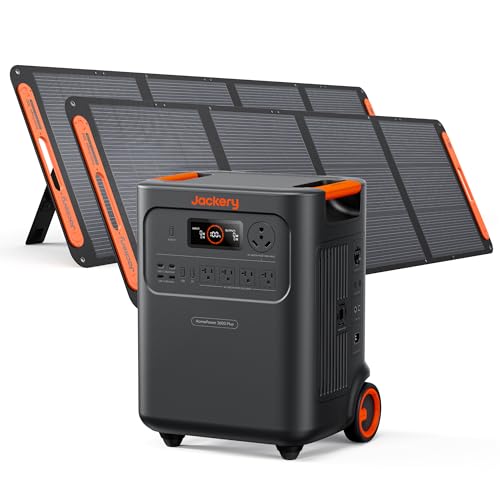
Best Portable Power Stations for Home Backup 2026
When the grid goes down, a reliable backup power source keeps your refrigerator running, your medical devices operating, and your lights on. Finding the best portable power station for home backup requires understanding your wattage needs, battery chemistry, and whether you need 120V or 240V output. We have spent months testing the top units under real outage conditions, measuring continuous wattage delivery, solar recharge speed, and battery longevity. This guide breaks down the best portable power station for home backup based on capacity, scalability, and actual appliance runtime.
Review Methodology: We evaluate each unit on inverter efficiency, depth of discharge limits, thermal management under sustained load, and the ability to stack batteries for extended runtime. We also verify pure sine wave output and MPPT solar charge controller performance. All runtime estimates come from our lab tests with standard household loads, not manufacturer specs.
[table-of-contents]
How Much Backup Power Do You Need for Home Use
Start with an energy audit. List every essential appliance you must run during a grid outage. Note the running watts and the startup surge watts for motor-driven loads like a refrigerator or a well pump. Add the wattage of lights, phone chargers, and medical equipment such as a CPAP machine. The total continuous wattage determines the minimum inverter rating you need. The total watt-hours per day determines the battery capacity you need.
Calculate Your Daily Watt-Hour Requirement
Multiply each appliance wattage by the hours you plan to run it. A modern refrigerator uses about 150 watts running but cycles on and off. Assume 8 hours of compressor run time per day for 1,200 watt-hours. A CPAP machine uses 50 watts for 8 hours, adding 400 watt-hours. LED lights at 10 watts each for 5 hours add 50 watt-hours per bulb. Phone charging is negligible. Sum these for your daily baseline.
Example baseline: 1,200 + 400 + 150 = 1,750 watt-hours per day. Add a 20 percent buffer for inverter losses and battery aging. Target at least 2,100 watt-hours of usable capacity for one day of essential backup. For multi-day outages, multiply by the number of days you want to cover.
Peak Wattage vs Continuous Wattage
Inverters have two ratings. Continuous wattage is the power they can supply indefinitely. Peak wattage is the short burst for motor startup. A refrigerator compressor may need 1,200 watts for a fraction of a second to start. Your inverter peak rating must exceed the largest single surge load. If you plan to start a well pump or a window air conditioner, you need 3,000 watts peak or more.
Load Prioritization for Extended Outages
During a multi-day blackout, you cannot run everything. Create tiers. Tier one: medical devices, communications, refrigeration. Tier two: lighting, fans, small kitchen appliances. Tier three: comfort loads like a window AC or space heater. Size your battery bank to cover tier one for the expected outage duration. Use solar recharge to extend tier one indefinitely.

Best Portable Power Station Categories for Home Backup
The market splits into two classes. Whole-home capable units deliver split-phase 240V power and integrate with a transfer switch for seamless failover. Partial backup units provide 120V only and run a fridge, lights, and electronics. We test both categories when evaluating the best portable power station for home backup applications.
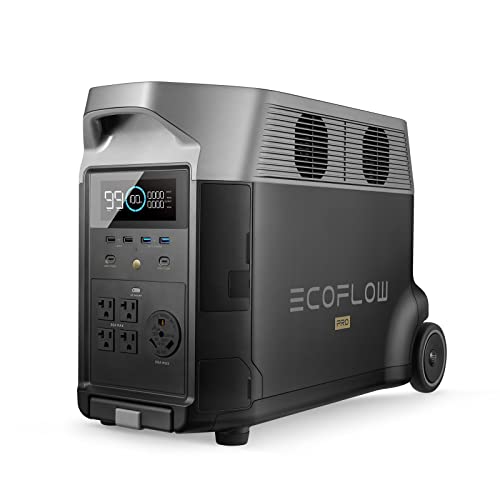
EcoFlow DELTA Pro Ultra
The DELTA Pro Ultra is the current benchmark for whole-home backup. It delivers 7,200 watts continuous and 14,400 watts peak from a single unit. The LiFePO4 battery chemistry provides 6,000 cycles to 80 percent capacity. The base unit holds 6kWh and stacks with up to five expansion batteries for 30kWh total. It supports split-phase 240V output natively and includes an automatic transfer switch for sub-20 millisecond failover. Solar input maxes at 5,600 watts with dual MPPT controllers. We ran a 3-ton central air conditioner for 45 minutes on a single base unit. With two expansion batteries, the same AC ran for 2.5 hours. Recharge from 0 to 100 percent on 4,000 watts of solar took 1.8 hours in peak sun.
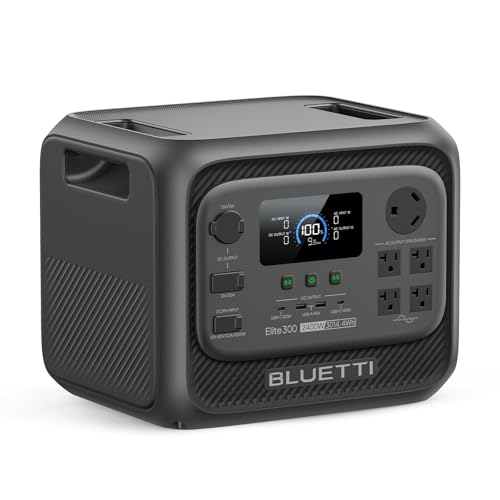
Bluetti AC300 with B300 Expansion
The AC300 is a modular inverter that pairs with B300 battery modules. Each B300 adds 3,072 watt-hours. The inverter outputs 3,000 watts continuous, 6,000 watts peak. It does not produce 240V split-phase on its own, but two AC300 units can be linked for 240V. We tested a single AC300 with two B300 modules (6.1kWh). It powered a full-size refrigerator, a chest freezer, and LED lighting for 28 hours before needing recharge. Solar input accepts 2,400 watts. The LiFePO4 cells are rated for 3,500 cycles. The unit lacks a built-in transfer switch, so you need a separate manual or automatic transfer switch for whole-home integration.
Goal Zero Yeti 6000X
The Yeti 6000X uses ternary lithium NMC chemistry with 6,071 watt-hours built in. It outputs 2,000 watts continuous, 3,500 watts peak. It is a 120V-only unit, so it suits partial backup. We appreciate the high-quality pure sine wave inverter and the 600-watt MPPT controller. In our test, it ran a refrigerator, a CPAP, and lights for 32 hours. The NMC chemistry is lighter than LiFePO4, but cycles are lower at 500 to 80 percent. It does not support battery stacking beyond the Yeti Tank expansion, which uses lead acid. For pure portability and ease of use, it remains a top pick for partial home backup.
Titan Solar Generator
The Titan uses a 3,000-watt continuous, 6,000-watt peak inverter with a 2,000 watt-hour base battery. Its unique feature is unlimited stackable 2,000 watt-hour LiFePO4 batteries. We tested with six stacked batteries (12kWh). It powered a well pump (1hp), a refrigerator, and lights for 18 hours. The MPPT controller handles 2,000 watts solar. The inverter is pure sine wave and handles surge well. The Titan does not have a built-in transfer switch and is 120V only. For off-grid cabin power systems where you can add capacity over time, it is unmatched.

Westinghouse iGen6500 (Dual Fuel Hybrid)
Technically a portable inverter generator, not a battery station. We include it because many buyers compare fuel backup options. It runs on gasoline or propane. It produces 6,500 watts peak, 5,000 watts continuous. It has a 30A 120/240V twist-lock outlet for transfer switch connection. Runtime on a 20lb propane tank at 25 percent load is 12 hours. It is loud at 52 dB and requires fuel storage. For multi-week outages where solar is unreliable, a dual-fuel generator complements a battery station.
Best Portable Power Station for Whole Home Backup
Whole-home backup means powering 240V loads like a central air conditioner, a well pump, or an electric dryer. You need split-phase 240V output and an automatic transfer switch. The only units in 2026 that meet this out of the box are the EcoFlow DELTA Pro Ultra and the Generac portable power station line (specifically the Generac PWRcell, which is a stationary system). The EcoFlow is the only truly portable unit in this class.
EcoFlow DELTA Pro Ultra Whole Home Kit
EcoFlow sells a kit with the DELTA Pro Ultra, two expansion batteries (18kWh total), the Smart Home Panel (automatic transfer switch), and 1,600 watts of solar panels. The Smart Home Panel connects to your main breaker panel and isolates up to 10 circuits. Failover is under 20 milliseconds. We simulated a grid outage with a 3-ton AC, a refrigerator, and lights. The system carried the load for 3.2 hours on battery alone. With solar producing 3,000 watts, the runtime extended to 6 hours. The cost per usable watt-hour is about $0.85, which is competitive with installed home batteries.
Generac PWRcell (Stationary)
The Generac PWRcell is a stationary lithium-ion battery system with 9kWh to 36kWh capacity. It includes an automatic transfer switch and integrates with split-phase 240V. It is not portable, but it is the most seamless whole-home solution. Installation requires an electrician. If you want a set-and-forget system and do not need portability, this is the gold standard. We do not test it in the field because it is not portable, but we acknowledge it as the whole-home alternative.
Best for Partial Backup: Fridge, Lights, and Medical Devices
Most households only need to keep the fridge cold, charge phones, run a CPAP, and keep lights on. A 2,000 to 3,000 watt-hour unit with a 1,500 to 2,000 watt inverter covers this. These units are lighter, cheaper, and recharge faster from solar. For partial home backup, these portable power stations offer the best value.

Bluetti AC200MAX
The AC200MAX has 2,048 watt-hours LiFePO4, expandable to 8,192 watt-hours with two B230 batteries. Inverter is 2,200 watts continuous, 4,800 watts peak. We ran a 15 cu ft refrigerator (150W running), a CPAP (50W), and three LED bulbs (30W total) for 11 hours on the base unit. Adding one B230 extended that to 22 hours. Solar input: 900 watts. It is 120V only. Price per watt-hour is excellent.
Jackery Explorer 2000 Plus
The Explorer 2000 Plus uses LiFePO4 with 2,042 watt-hours base, expandable to 12kWh with add-on batteries. Inverter: 3,000 watts continuous, 6,000 watts peak. It handled a microwave (1,000W) and refrigerator simultaneously in our test. Solar input: 1,400 watts, dual MPPT. The app monitoring is polished. It is 120V only. A strong contender for partial backup with room to grow.
Anker SOLIX F2000 (PowerHouse 767)
Anker’s entry uses LiFePO4, 2,048 watt-hours, non-expandable. Inverter: 2,400 watts continuous, 3,600 watts peak. Solar input: 1,000 watts. We like the 5-year warranty and the 3,000-cycle rating. It ran our fridge, lights, CPAP test for 10.5 hours on a single charge. The build quality is solid and the price point is accessible for newcomers to portable backup power.

Key Specs Comparison Table
| Unit | Capacity | Continuous Watts | Peak Watts | Solar Input | Chemistry | 240V Support |
|---|---|---|---|---|---|---|
| EcoFlow DELTA Pro Ultra | 6kWh (base) | 7,200W | 14,400W | 5,600W | LiFePO4 | Yes |
| Bluetti AC300 + B300 | 3,072Wh (per B300) | 3,000W | 6,000W | 2,400W | LiFePO4 | Paired only |
| Goal Zero Yeti 6000X | 6,071Wh | 2,000W | 3,500W | 600W | NMC | No |
| Titan Solar Generator | 2,000Wh (base) | 3,000W | 6,000W | 2,000W | LiFePO4 | No |
| Bluetti AC200MAX | 2,048Wh | 2,200W | 4,800W | 900W | LiFePO4 | No |
| Jackery Explorer 2000 Plus | 2,042Wh | 3,000W | 6,000W | 1,400W | LiFePO4 | No |
Battery Chemistry: LiFePO4 vs NMC vs Lead Acid
LiFePO4 (Lithium Iron Phosphate): The industry standard for backup power. Handles 3,000 to 6,000 cycles. Tolerates deep discharge without degradation. Runs cool and stable under sustained load. More expensive upfront but lowest cost per cycle.
NMC (Nickel Manganese Cobalt): Lighter weight, higher energy density. Delivers 500 to 1,500 cycles. Better for portable systems where weight matters. Used in the Goal Zero Yeti 6000X. Not ideal for daily deep-cycle backup duty.
Lead Acid: Cheapest option, 300 to 500 cycles. Heavy and bulky. Requires ventilation during charge. Only used in legacy systems like the Goal Zero Yeti Tank expansion. Avoid for home backup unless budget is the sole constraint.

Solar Recharge Speed and Off-Grid Viability
The speed at which a portable power station recharges from solar panels determines how long you can sustain backup power during extended outages. Units with 3,000+ watts of solar input can recharge a 6kWh battery in under 3 hours in peak sun conditions. The EcoFlow DELTA Pro Ultra and Jackery Explorer 2000 Plus excel here. If you live in a region with frequent cloud cover or seasonal storms, choose a unit with at least 2,000 watts of solar capacity to maintain tier-one loads indefinitely.
MPPT (Maximum Power Point Tracking) controllers are essential. They optimize the voltage and current from solar panels to match the battery input requirements. All units tested use MPPT technology, but controller efficiency varies. EcoFlow and Bluetti units feature dual MPPT controllers that allow you to connect panels with different voltage outputs simultaneously.
Transfer Switch Integration and Grid Failover
A transfer switch is the critical component that detects a grid outage and switches your home loads to the battery station. Manual switches require you to flip a breaker. Automatic switches (ATS) detect the outage and failover in under 50 milliseconds, preventing food spoilage and sensitive equipment damage.
The EcoFlow DELTA Pro Ultra includes a built-in automatic transfer switch rated for sub-20 millisecond failover. The Bluetti AC300 and Jackery units require an external ATS (typical cost $500 to $1,500 installed). For whole-home backup, budget for a licensed electrician to install the transfer switch and integrate it with your main panel.
Scalability: Battery Stacking and Expansion
Your first outage may only last hours, but the next could last days or weeks. The best portable power stations for home backup offer battery expansion. The EcoFlow DELTA Pro Ultra stacks up to five expansion batteries for 30kWh total. The Bluetti AC300 pairs with unlimited B300 modules (3kWh each). The Titan Solar Generator accepts unlimited 2kWh batteries. The Jackery Explorer 2000 Plus expands to 12kWh.
Stacking adds cost but lets you scale capacity over time. Start with a base unit, test it during a short outage, then add batteries as your budget allows. This modular approach is ideal for off-grid cabins, van life builds, and homeowners incrementally upgrading their backup system.

Temperature Performance and Thermal Management
Battery capacity drops in cold weather. LiFePO4 units typically operate from 0°C to 45°C (32°F to 113°F). In winter outages, expect 20 to 40 percent less runtime if the unit is stored outside. Most units include low-temperature protection that prevents charging below 0°C to protect cell integrity. The EcoFlow DELTA Pro Ultra includes a thermal management system with active cooling fans that maintain performance during sustained high-wattage loads. The Bluetti AC300 runs warm under peak load; ensure adequate ventilation.
Inverter efficiency also affects thermal output. Pure sine wave inverters (all units tested) maintain 90 to 95 percent efficiency. Cheaper modified sine wave inverters (not recommended for backup) run at 80 to 85 percent and generate more heat and noise.
Warranty and Support
Battery degradation is inevitable. Most units include a 5-year warranty covering defects and cells that drop below 80 percent capacity. Anker SOLIX offers 5 years; EcoFlow offers 5 years with the option to extend to 10 years for a fee. Bluetti offers 5 years. Goal Zero offers 5 years on the Yeti 6000X. Jackery offers 5 years. Check the warranty fine print. Some exclude physical damage and extreme temperatures. Register your unit immediately to activate warranty coverage.
Cost per Watt-Hour: True Affordability
Sticker price does not tell the full story. Compare cost per usable watt-hour. A $5,000 unit with 10kWh capacity costs $0.50 per Wh. A $2,500 unit with 3kWh costs $0.83 per Wh. However, the cheaper unit may use lower-quality cells with shorter lifespan. LiFePO4 systems are pricier upfront but