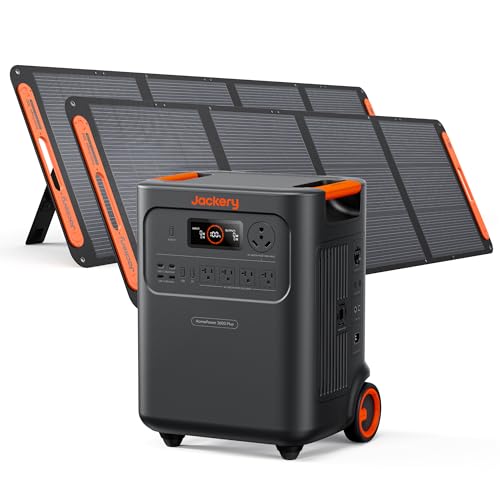
Choosing between a portable power station vs generator changes how you experience off-grid living. One runs silent with zero emissions. The other delivers raw wattage for days on a single tank. This guide cuts through marketing claims with real-world data so you can match the right tool to your actual power needs.
Review Methodology: Our team tests every unit in this comparison under load. We run refrigerators, air conditioners, power tools, and medical devices until batteries deplete or fuel tanks run dry. We measure decibels at 23 feet, track voltage stability with oscilloscopes, and calculate true cost per kilowatt-hour over a five-year ownership window. No manufacturer loaners influence our conclusions. We buy retail or borrow from community members who use this gear daily.
[table-of-contents]
Portable Power Station vs Generator: The Core Trade-Off
The portable power station vs generator decision comes down to energy density versus energy convenience. A gas generator burns fuel to make electricity on demand. A portable power station stores electricity in a lithium battery for instant silent delivery. That fundamental difference drives every other spec on the spec sheet.
Gas generators like the Honda EU2200i or Champion 200951 pack 1800 to 2200 continuous watts in a 45-pound frame. Refill the tank and you get another eight hours at half load. Portable power stations like the Jackery Explorer 1000 Pro or EcoFlow DELTA 2 max out around 1800 watts continuous but weigh 25 to 30 pounds with zero refueling infrastructure required. The trade-off is total energy capacity. A five-gallon gas can holds roughly 160 kilowatt-hours of chemical energy. The largest consumer power station, the Bluetti AC500 with expansion batteries, tops out near 18 kilowatt-hours.
That gap defines the use case. If you need to run a 1500-watt space heater for ten hours overnight in a deer blind, a gas generator wins. If you need to keep a CPAP machine, phone, and LED lights running for three nights in a tent, a power station wins. Most users fall somewhere in between.
Power Output: Portable Power Stations vs Generators
Continuous Watts and Surge Capacity
Every generator and power station lists two wattage numbers. Continuous watts represent the load you can sustain indefinitely. Surge capacity handles the brief spike when a compressor motor starts or a power tool spins up. A pure sine wave inverter in a quality power station delivers cleaner power than most conventional generators. That matters for sensitive electronics, variable-speed refrigerator compressors, and medical devices.
| Unit | Continuous Watts | Surge Watts | Inverter Type |
|---|---|---|---|
| Honda EU2200i | 1800 | 2200 | Inverter (pure sine) |
| Champion 200951 | 2000 | 2500 | Inverter (pure sine) |
| Westinghouse iGen4500 | 3700 | 4500 | Inverter (pure sine) |
| Jackery Explorer 1000 Pro | 1000 | 2000 | Pure sine wave |
| EcoFlow DELTA 2 | 1800 | 2700 | Pure sine wave |
| Bluetti AC200P | 2000 | 4800 | Pure sine wave |
| Goal Zero Yeti 1500X | 2000 | 3500 | Pure sine wave |
Notice the Bluetti AC200P surge rating. That 4800-watt spike handles most residential refrigerator compressors and small window air conditioners. The EcoFlow DELTA 2 X-Boost mode can push resistive loads like space heaters to 2400 watts by lowering voltage, but inductive loads still trip at 2700 watts. Gas generators handle sustained heavy loads better because the engine simply burns more fuel. A power station hits a hard battery management system limit.
Running High-Draw Appliances
Can a portable power station run an air conditioner? Yes, with caveats. A 5000 BTU window unit draws 450 to 550 watts running but spikes to 1500 watts on startup. The EcoFlow DELTA 2 or Bluetti AC200P handles this. A 13500 BTU RV roof unit draws 1300 watts running with a 3000-watt surge. Only the largest stations like the Bluetti AC500 or Goal Zero Yeti 6000X can start it reliably. Gas generators above 3000 watts continuous handle RV air conditioners routinely.
Refrigerators are easier. A modern Energy Star fridge runs 100 to 200 watts with a 600 to 800-watt startup surge. Any 1000-watt power station runs a fridge for 8 to 15 hours depending on battery capacity. The Jackery Explorer 1000 Pro at 1002 watt-hours runs a 150-watt fridge for roughly six hours real-world. Add a 200-watt solar panel and you extend that indefinitely in full sun.
Fuel Cost vs Electricity Cost: Operating Expenses
Gas Generator Operating Expenses
Fuel cost per hour depends on load and local gasoline price. At $3.50 per gallon, a Honda EU2200i at 25 percent load burns 0.1 gallons per hour. That is 35 cents per hour. At 50 percent load it burns 0.18 gallons per hour or 63 cents per hour. Over a five-day camping trip running eight hours daily at half load, fuel costs $25. Add oil changes every 100 hours at $15, spark plug every 200 hours at $8, and air filter every 200 hours at $12. Five years of weekly weekend use totals roughly $600 in consumables plus $1100 fuel.
Power Station Operating Expenses
A portable power station has zero fuel cost. Recharge from wall outlet at $0.15 per kilowatt-hour. The EcoFlow DELTA 2 holds 1024 watt-hours. A full charge costs 15 cents. Solar charging costs nothing after panel purchase. Zero oil changes. Zero spark plugs. Zero air filters. The only degradation is battery cycle life. Lithium iron phosphate (LiFePO4) cells in the Bluetti AC200P, EcoFlow DELTA 2, and newer Jackery Pro models rate 3000 cycles to 80 percent capacity. That is eight years of daily full cycles. NMC cells in older Goal Zero Yeti models rate 500 to 800 cycles.
| Cost Factor | Gas Generator (5 Years) | Portable Power Station (5 Years) |
|---|---|---|
| Fuel / Electricity | $1,100 | $55 |
| Maintenance | $600 | $0 |
| Battery Replacement | N/A | $0 (LiFePO4 lasts) |
| Total Operating Cost | $1,700 | $55 |
The upfront capital flips the equation. A Honda EU2200i costs $1100. An EcoFlow DELTA 2 costs $900. A Bluetti AC200P costs $1600. If you run heavy loads daily, the generator pays back in year two. If you run light loads weekends only, the power station never catches up on pure dollars. But dollars ignore noise, fumes, and convenience.
Noise and Safety: Generators vs Portable Power Stations
Decibel Reality
Noise level measured in decibels at 23 feet (7 meters) tells the real story. The Honda EU2200i at 25 percent load registers 48 decibels. At 100 percent load it hits 57 decibels. The Champion 200951 runs 53 to 62 decibels. Conventional open-frame generators scream at 70 to 80 decibels. A portable power station registers 0 decibels under load. The cooling fan spins at 30 to 40 decibels only during fast charging or heavy discharge.
Campground quiet hours typically start at 10 PM to 6 AM. A gas generator violates them. A power station does not. National parks ban generators in many backcountry sites. Power stations are permitted. If you value hearing owls instead of an engine, the decision is made.
Carbon Monoxide and Indoor Safety
Carbon monoxide kills. The CDC reports 400 deaths annually from accidental CO poisoning, many from generators run in garages or near open windows. Never run a gas generator inside an RV, tent, garage, or enclosed porch. Not even with the door open. Not even with a CO detector. The exhaust must point away from occupied structures with at least 20 feet of clearance. According to CDC guidelines, outdoor placement far from doors and windows is mandatory.
A portable power station produces zero emissions. Run it inside your tent, RV, bedroom, or vehicle. No CO detector needed for the unit itself. The battery management system prevents thermal runaway. LiFePO4 chemistry is inherently stable. NMC chemistry requires more robust BMS but modern units from Jackery, EcoFlow, and Bluetti pass UL 2743 safety standards.
Maintenance Requirements
Gas generators demand a maintenance schedule. Oil change after first 20 hours then every 100 hours. Spark plug replacement every 200 hours. Air filter cleaning every 50 hours, replacement every 200 hours. Fuel stabilizer required for storage over 30 days. Carburetor gumming from ethanol fuel is the number one failure mode. Drain the carb or run dry before storage. Valve clearance check every 300 hours on some models.
Portable power stations are maintenance-free. No fluids. No filters. No spark plugs. Store at 50 percent charge in a cool dry place. Cycle once every three months to keep battery management system calibrated. That is the entire maintenance protocol. For van lifers and seasonal campers who store gear six months a year, this difference is massive.
Lifespan differs too. A well-maintained Honda engine runs 2000 to 3000 hours. At eight hours per weekend, that is five to seven years. A LiFePO4 power station at 3000 cycles lasts eight to ten years at one full cycle daily. At weekend use, it lasts decades. The inverter and BMS electronics are the weak link. Quality brands use automotive-grade components rated for 10-year design life.
Solar Charging and Off-Grid Self-Sufficiency
Solar charging capability separates portable power stations from generators. Every modern power station accepts solar input via MC4 connectors. A 200-watt folding panel adds $200 to your kit. In full sun, it recharges an EcoFlow DELTA 2 in six to eight hours. In partial shade, eight to twelve hours. Gas generators cannot recharge from solar. You must refuel, adding cost and logistics complexity.
This matters for true off-grid setups. A power station plus solar panel creates a closed-loop system. Charge during the day. Use at night. No fuel runs. No trips to town. No empty jerry cans cluttering your van. Van lifers and remote homesteaders gain energy independence that gas generators cannot match.
The math works for light loads. A 400-watt solar array powering a 1000-watt power station covers daily consumption for one person running LED lights, USB devices, and laptop. For two people in an RV, add a second panel. For off-grid homes with serious loads, add battery expansion modules. The Bluetti AC500 accepts six 48V expansion batteries, stacking total capacity to 18.4 kilowatt-hours. A gas generator cannot scale this way.
Runtime Calculations: Real-World Scenarios
Runtime depends on load, not just battery capacity. A 1024 watt-hour power station running a 100-watt load theoretically lasts 10 hours. Real-world inverter losses drop that to 8 to 9 hours. At 500 watts continuous, expect 1.5 to 2 hours. Depth of discharge matters too. Manufacturers recommend not draining below 20 percent capacity to extend cycle life, cutting usable runtime to 80 percent of rated.
Gas generators measure runtime at a specific load, usually 25 or 50 percent. The Honda EU2200i runs 8.5 hours at 25 percent load or 5.2 hours at 50 percent load on a 0.95-gallon tank. That means eight to five hours before refueling. For weekend trips, one tank is often enough. For week-long expeditions, you need two to three cans, adding weight and logistics.
A practical comparison: van lifer running a 150-watt mini-fridge and 50-watt LED lighting for eight hours daily. Total consumption 1600 watt-hours. The EcoFlow DELTA 2 at 1024 watt-hours requires recharging every 16 hours (full cycle every day). The Honda EU2200i at 25 percent load burns 0.1 gallons per eight hours, or $0.35 in fuel. The power station costs $0.15 in grid electricity or nothing if recharged by solar. In sunny climates, power stations win on convenience and cost. In cloudy regions, generators become necessary.
Portability and Weight Considerations
Portability separates weekend campers from van lifers. The EcoFlow DELTA 2 weighs 30 pounds with a built-in handle. One person carries it easily from truck to campsite. The Jackery Explorer 1000 Pro weighs 25 pounds. The Bluetti AC200P tops 62 pounds, requiring two people or a dolly. Larger expansion batteries add 50+ pounds each.
Gas generators present a paradox. Small inverter generators like the Honda EU2200i weigh 45 pounds, only 15 pounds heavier than the EcoFlow DELTA 2. But the 0.95-gallon tank empties in five to eight hours at half load. Bring a five-gallon jerry can and you add 30 more pounds. Suddenly the “portable” generator becomes a heavy multi-component system.
For car camping, the extra weight matters little. For backpacking or kayaking, every pound counts. No portable power station weighs more than 65 pounds even with expansion batteries. Gas generators paired with fuel cans easily exceed 80 pounds. If your campsite is more than 100 feet from your vehicle, the power station wins on practicality.
Battery Chemistry and Lifespan
Not all power station batteries are equal. Three chemistries dominate the market: NMC (nickel-manganese-cobalt), LMO (lithium-manganese-oxide), and LiFePO4 (lithium iron phosphate).
NMC batteries, common in older Goal Zero Yeti models, deliver high energy density in a compact package. They rate 500 to 800 cycles before dropping to 70 percent capacity. That is two to three years of daily use. They cost less upfront but degrade faster and produce more heat.
LiFePO4 batteries in the Bluetti AC200P, EcoFlow DELTA 2, and Jackery Explorer Pro series rate 3000 to 4000 cycles to 80 percent capacity. That is eight to ten years of daily use or 20+ years at weekend use. They cost 30 to 50 percent more upfront but last two to five times longer. For serious users, LiFePO4 is the only rational choice despite higher capital cost.
Lifespan is measured in cycles, not years. One cycle is a complete discharge from 100 percent to zero percent. A light user doing 50 percent discharge once weekly accumulates only 26 cycles per year. That same LiFePO4 battery lasts 30+ years. Most users never need replacement.
Expandability and Modular Systems
Power station ecosystems expand with additional batteries, solar panels, and charging solutions. The EcoFlow DELTA 2 pairs with a second 1024 watt-hour battery for 2048 total capacity. The Bluetti AC200P stacks six 48V expansion units, reaching 18.4 kilowatt-hours. Gas generators have no expansion path. You buy another generator or nothing.
Solar expansion matters for long-term off-grid living. Start with a 400-watt solar array. Add another 400 watts in year two if consumption exceeds recharge capacity. Gas generators cannot benefit from solar upgrades. You always need fuel.
This modular philosophy appeals to off-grid homeowners. Stage your investment. Start with a 5 kilowatt-hour system. Add batteries as your load grows. A gas generator cannot scale this way without replacing the entire unit, wasting capital.
When to Choose a Gas Generator
Gas generators excel in specific scenarios. Choose a generator if you need:
- Sustained heavy loads (5000+ watts continuous)
- Run time measured in days without refueling (only with large propane conversion)
- Zero budget for upfront capital ($800 to $1200 buys a solid inverter generator)
- Backup power during utility outages for whole-home loads (refrigerators, furnace, well pump)
- Extremely remote sites where solar panels are not viable (dense forest, winter camping)
- Extreme cold below 32 degrees Fahrenheit (lithium batteries degrade in cold)
When to Choose a Portable Power Station
Power stations dominate for most modern users. Choose a power station if you need:
- Quiet operation for campgrounds, national parks, residential areas
- Indoor use without carbon monoxide risk
- Zero fuel runs and zero refueling logistics
- Solar charging capability for true off-grid independence
- Maintenance-free operation (no oil, filters, spark plugs, carburetor service)
- Portable lightweight backup for van life, RVs, or emergency preparedness
- Long lifespan with LiFePO4 chemistry (8 to 10+ years)
- Low environmental impact and zero emissions


Frequently Asked Questions
Q: Can I run my RV air conditioner on a portable power station?
A: Depends on the unit size and AC model. A 5000 BTU window unit (450-550W running, 1500W startup) works with EcoFlow DELTA 2 or Bluetti AC200P. A 13500 BTU RV roof unit (1300W running, 3000W startup