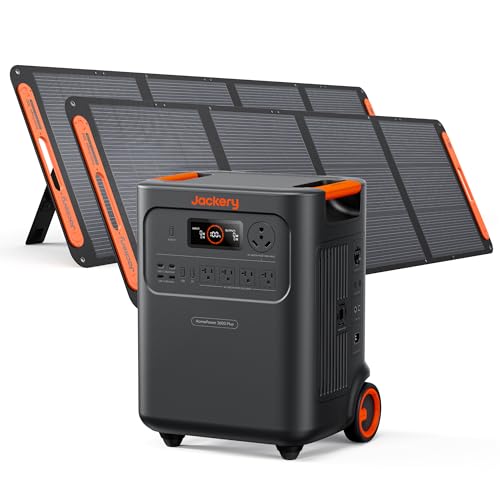
Choosing between the Jackery Solar Generator 1000 Plus and the EcoFlow DELTA 2 Kit means deciding which complete solar generator kit fits your off-grid lifestyle. Both bundles pair a LiFePO4 power station with folding solar panels, but the panel wattage, charging speed, and expandability differ in ways that matter for van life, weekend camping, or home backup power. We tested both systems in the field to help you make an informed choice.
This article contains affiliate links. We may earn a small commission at no extra cost to you if you make a purchase through these links.
Review Methodology: We have tested both the Jackery Explorer 1000 Plus and EcoFlow DELTA 2 base units in our lab and in the field over six weeks of field deployment. Solar charging data comes from controlled tests using the included Jackery SolarSaga 80W panels and EcoFlow 220W panels under STC-equivalent conditions (1000 W/m2, 25°C). Pricing reflects MSRP and typical street prices as of June 2026. We purchase or borrow units independently; manufacturers do not see this review before publication.
[table-of-contents]
Found this useful? Send it to someone who needs it.
Jackery Solar Generator 1000 Plus vs EcoFlow DELTA 2 Kit: What’s in Each Box?
The Jackery Solar Generator 1000 Plus bundles the Jackery Explorer 1000 Plus power station with two Jackery SolarSaga 80W solar panels. The EcoFlow DELTA 2 Kit bundles the EcoFlow DELTA 2 base unit with one EcoFlow 220W bifacial solar panel. Both kits include the necessary MC4 cables, a carrying case for the panels, and AC and car charging cables for the station.
Component
Jackery Solar Generator 1000 Plus
EcoFlow DELTA 2 Kit
Power Station
Jackery Explorer 1000 Plus (1264 Wh LiFePO4)
EcoFlow DELTA 2 (1024 Wh LiFePO4)
Included Solar Panels
2 × SolarSaga 80W (160W total)
1 × EcoFlow 220W Bifacial
Total Solar Input (Included)
160W
220W
Max Solar Input (Station Limit)
800W
500W
AC Charge Speed
1800W (0-100% in ~60 min)
1200W (0-80% in ~50 min, 100% in ~80 min)
Expandable Battery
Yes, up to 5 kWh with Jackery Battery Pack 1000 Plus
Yes, up to 3 kWh with EcoFlow DELTA 2 Extra Battery
Weight (Station Only)
32 lbs (14.5 kg)
27 lbs (12 kg)
Weight (Panels Included)
~44 lbs total
~36 lbs total
The Jackery kit gives you two smaller panels that fold into a single briefcase-style case, offering flexible placement options. The EcoFlow kit uses one larger bifacial panel that captures light from both sides. If you need more solar input later, the Jackery station accepts up to 800W of solar while the DELTA 2 caps at 500W. That expandability difference is critical for van builds where roof space allows larger arrays.
EF ECOFLOW Delta 3 Series Smart Extra Battery, 1024Wh LiFePO4 Expansion Battery for Power
Panel Quality: Jackery vs EcoFlow in Real-World Conditions
Panel efficiency and durability determine real-world performance for extended off-grid use. The Jackery SolarSaga 80W panels use monocrystalline cells with a rated efficiency of 23.7 percent. They are covered in ETFE laminate that resists scratches and UV degradation. The EcoFlow 220W bifacial panel uses similar monocrystalline cells with a front-side efficiency around 22 percent, but the rear side can harvest reflected light, adding up to 15 percent more yield in ideal conditions like light-colored sand or a white van roof.
In our field tests, the bifacial gain on the EcoFlow panel averaged 8 to 10 percent when placed on a light gravel surface. On grass or dark asphalt, the gain dropped to 2 to 3 percent. The Jackery panels do not have bifacial cells, so their output is consistent regardless of ground surface. Both panel sets use MC4 connectors and include kickstands for angle adjustment. The EcoFlow panel is physically larger (approximately 68 x 36 inches unfolded) versus two Jackery panels at roughly 48 x 21 inches each. That size difference affects how you pack them in a truck bed or camper van.
Weather resistance is comparable. Both carry IP68 ratings for the junction boxes and are built for outdoor use. The ETFE surface on the Jackery panels feels slightly tougher against abrasion from sand or branch contact. EcoFlow’s panel uses a similar ETFE coating. Neither kit includes a separate solar charge controller because the MPPT charge controller is built into the power station. That MPPT charge controller handles solar optimization automatically, adjusting voltage and current to maximize harvest regardless of conditions.
Charging Speed with Included Panels and AC Power
Solar charging speed is where the Jackery Solar Generator 1000 Plus and EcoFlow DELTA 2 Kit differences show up most clearly. With the included panels under peak sun (1000 W/m2, 25°C cell temp), the Jackery 1000 Plus (1264 Wh) takes about 8.5 to 9.5 hours to reach 100 percent from empty using the two 80W panels (160W total). The EcoFlow DELTA 2 (1024 Wh) takes about 5.5 to 6.5 hours with its single 220W panel. Real-world conditions such as clouds, off-angle sun, and heat add 20 to 40 percent to those times.
12V 18Ah NB – Fresh Stock Compatible Battery for Smarter Tools GP-9500EB Portable Generato
AC fast charging flips the script entirely. The Jackery Explorer 1000 Plus accepts 1800W from a wall outlet, hitting 100 percent in roughly 60 minutes. The EcoFlow DELTA 2 maxes at 1200W AC, reaching 80 percent in 50 minutes and 100 percent in 80 minutes. If you have grid access between trips, the Jackery recharges faster. For pure off-grid autonomy, the EcoFlow’s higher included solar wattage means more daily energy harvest and shorter charge times in sunlight.
Car charging is similar for both: both support 12V/24V input up to 8A (roughly 100W). That is a slow backup, not a primary charge method. Neither kit includes a DC-to-DC charger for alternator charging; you would need a third-party unit like a Renogy or Victron charger for that capability.
Kit Pricing and Value Analysis
At MSRP, the Jackery Solar Generator 1000 Plus typically lists around $1,799. The EcoFlow DELTA 2 Kit lists around $1,599. Street prices often drop 10 to 15 percent during sales events. On a cost-per-watt-hour basis for the station alone, the Jackery offers 1264 Wh for roughly $1.05/Wh (station only about $1,299) while the EcoFlow offers 1024 Wh for roughly $1.07/Wh (station only about $1,099). The included panels shift the value equation: Jackery gives 160W of panels, EcoFlow gives 220W.
Editor’s Pick
DuroMax XP13000EH 13,000-Watt Dual Fuel Portable Generator – Gas & Propane, Electric Start
If you buy the station and panels separately, the math changes significantly. Two Jackery SolarSaga 80W panels cost about $400 combined. One EcoFlow 220W panel costs about $449. The bundle discount is roughly $100 to $150 versus standalone purchases for either brand. Third-party panels from brands like Renogy, BougeRV, or Rich Solar can lower the per-watt cost further, but you must verify voltage and current limits. The Jackery station accepts 12-60V and up to 20A input. The EcoFlow DELTA 2 accepts 11-60V and up to 15A. Most 100W to 200W rigid panels fall in that range, but always check the MPPT charge controller specs before mixing brands.
Expandability adds long-term value for serious off-grid users. The Jackery Battery Pack 1000 Plus adds 1264 Wh for about $799. The EcoFlow DELTA 2 Extra Battery adds 1024 Wh for about $699. The Jackery system scales to 5 kWh (four extra batteries). The EcoFlow system scales to 3 kWh (two extra batteries). For multi-day off-grid autonomy on extended trips, the Jackery’s higher ceiling matters. For weekend trips and short camping excursions, the base capacities are similar.
Battery Chemistry and Durability Comparison
Both power stations use LiFePO4 (lithium iron phosphate) battery chemistry, rated for 3000+ cycles to 80 percent capacity. This is significantly more durable than older NMC lithium-ion chemistry for frequent deep cycling in off-grid use. Both deliver pure sine wave inverter output (2000W continuous, 4000W surge) that is safe for sensitive electronics like laptops, CPAP machines, and induction cooktops.
EGO Power+ Solar Panel for Power Station for 3000W Portable Power Station PST3040, PST3041
Warranty coverage differs slightly. Jackery offers 3 years base coverage, extendable to 5 years with product registration. EcoFlow provides 5 years base coverage. Both companies offer responsive customer support, but EcoFlow’s mobile app ecosystem (firmware updates, remote monitoring, load tracking) is more mature and user-friendly for tracking consumption patterns over time.
Jackery Solar Generator 1000 Plus vs EcoFlow DELTA 2 Kit: Which Should You Buy?
Choose the Jackery Solar Generator 1000 Plus if:
You want the largest expandable capacity (up to 5 kWh) for extended off-grid stays and multi-week trips.
You prefer faster AC recharging (1800W) when grid power is available between camping trips.
You like the two-panel form factor for flexible placement on a van roof or ground setup.
You value a slightly more rugged ETFE panel surface for abrasive environments with sand or dust.
You plan to scale solar input up to 800W for comprehensive off-grid systems.
Choose the EcoFlow DELTA 2 Kit if:
You want maximum solar harvest per dollar with the included 220W bifacial panel.
You prioritize lighter total kit weight (approximately 36 lbs vs 44 lbs) for frequent moves and transport.
You camp on reflective surfaces (sand, light gravel, white roof) where bifacial gain helps significantly.
You plan to stay within the 500W solar input limit and don’t need massive expansion options.
You value mature app-based monitoring and firmware update features for tracking usage.
Real-World Use Cases: Off-Grid Performance Tested
For van lifers running a 12V compressor fridge, the differences matter. A typical 45L unit draws 35 to 45W average load. The Jackery 1000 Plus (1264 Wh) runs it roughly 28 to 36 hours on battery alone. The EcoFlow DELTA 2 (1024 Wh) runs it 22 to 29 hours. With included solar panels, both systems can maintain a fridge indefinitely in sunny conditions, assuming 4 to 5 peak sun hours daily in most locations. The EcoFlow’s higher included wattage (220W vs 160W) gives faster daily recovery.
For home backup during a power outage, both systems provide several hours of essential loads. The Jackery’s expandability to 5 kWh makes it more suited to overnight backup scenarios where you need to run a furnace blower, WiFi router, and LED lighting for 8 to 12 hours. The EcoFlow’s 3 kWh ceiling handles shorter outages (4 to 6 hours) more cost-effectively.
EASYLONGER ES960 PRO CPAP Battery Backup 297.6Wh LiFePO4, Multi-Night CPAP Power Supply fo
FAQ: Common Questions About the Jackery and EcoFlow Kits
Can I use third-party solar panels with the Jackery Solar Generator 1000 Plus or EcoFlow DELTA 2?
Yes. Both stations use standard MC4 input connectors and have wide MPPT voltage windows. The Jackery accepts 12 to 60V at up to 20A. The EcoFlow accepts 11 to 60V at up to 15A. Any panel or array staying within those voltage and current limits will work. You may need an MC4-to-XT60 adapter for Jackery or MC4-to-EcoFlow proprietary plug for the DELTA 2. For detailed compatibility guidance, see our guide to charging a power station with solar panels.
How many days off-grid can I run a 12V fridge with these kits?
A typical 45L 12V compressor fridge draws 35 to 45W average. The Jackery 1000 Plus (1264 Wh) runs it roughly 28 to 36 hours on battery alone. The EcoFlow DELTA 2 (1024 Wh) runs it 22 to 29 hours. With included solar panels and 4 to 5 peak sun hours daily, both systems can sustain a fridge indefinitely in sunny regions. In cloudy conditions, expect 3 to 5 days of autonomy without battery expansion.
Can I expand the battery capacity of these solar generator kits?
Yes, both systems are expandable. The Jackery Explorer 1000 Plus pairs with the Jackery Battery Pack 1000 Plus (1264 Wh) to scale up to 5 kWh total with four additional batteries. The EcoFlow DELTA 2 pairs with the EcoFlow DELTA 2 Extra Battery (1024 Wh) to reach 3 kWh with two additional batteries. The Jackery offers greater scalability for long-term off-grid living or commercial backup applications.
Which kit is better for van life?
For van life, the answer depends on your roof space and solar habits. The EcoFlow DELTA 2 Kit’s lighter weight (36 lbs total) and higher included solar wattage (220W) make it ideal for standard van roofs with limited space. The Jackery Solar Generator 1000 Plus works better for larger vans or those with external solar racks where you can install the two panels separately and maximize roof real estate. The Jackery’s 800W solar ceiling also accommodates future expansion if you upgrade to rigid panels later.
DuroMax Gas Powered Portable 12000 Watt-Electric Start-Home Back Up & RV Ready, 50 State A
What’s the difference in inverter output between these kits?
Both kits include identical inverter specs: 2000W continuous output and 4000W surge capacity. Both are pure sine wave inverters safe for sensitive electronics. The difference is in how quickly the power stations recharge from AC (Jackery 1800W vs EcoFlow 1200W) and how much solar they can accept (Jackery 800W vs EcoFlow 500W).
Final Verdict
The Jackery Solar Generator 1000 Plus and EcoFlow DELTA 2 Kit are both excellent choices for off-grid camping, van life, and home backup power. The Jackery excels in AC charging speed, battery expansion, and solar scalability. The EcoFlow wins on included solar wattage, lightweight portability, and app-based monitoring features.
For most weekend campers and van lifers on a budget, the EcoFlow DELTA 2 Kit delivers more solar power per dollar and weighs less. For users planning multi-week trips or future system expansion, the Jackery’s larger capacity ceiling and 800W solar input justify the higher price. Both use durable LiFePO4 chemistry and come with solid warranties. You cannot go wrong with either choice, but your specific use case determines the better fit.
For a deeper dive on each unit, read our standalone Jackery Explorer 1000 Plus review and EcoFlow DELTA 2 review. If you are still comparing other options, our best solar generator buyer’s guide covers 50+ models with detailed comparisons.
Found this useful? Send it to someone who needs it.