The Anker 767 PowerHouse, also sold as the SOLIX F2000 (model A1780), is a 2048Wh lithium iron phosphate portable power station with a 2400W inverter, aimed at van life, camping and home backup. It launched in 2022, with pre-order shipments from December 5, 2022. This guide reads Anker’s published specifications and manual to explain what the numbers mean for real use.
A status note: Anker’s US product page for this unit now features the SOLIX C2000 Gen 2, with the F2000 appearing only in a comparison table. The spec material does not say the 767 was discontinued or replaced, so we do not claim that. Check current availability and price on the seller’s page, since Anker’s pages list no manufacturer price.
How this review was produced: we do not buy or test the products we cover. This is a desk analysis of manufacturer specifications, manuals and documentation, safety and certification listings, and publicly available owner reports and third-party reviews. Figures are manufacturer claims or reported owner results.
The product card below is a separate Amazon listing for the Anker SOLIX C2000 Gen 2, the model Anker’s US page for this unit now features, not the 767 PowerHouse reviewed here.
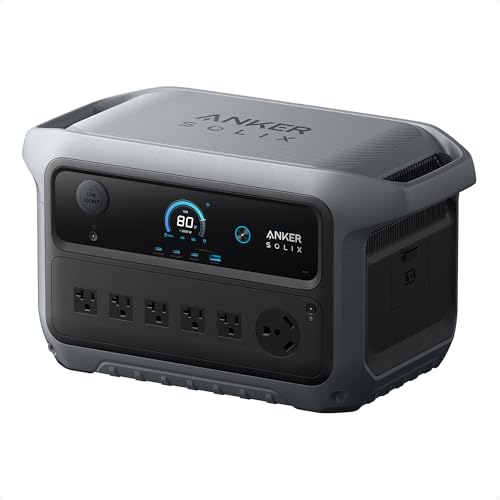
What Anker Publishes for the 767
- Capacity: 2048Wh, LiFePO4 (LFP) chemistry, with 3,000 cycles to 80% capacity claimed
- AC output: 2400W continuous (120V, 20A, 60Hz); Anker’s comparison table on its C2000 Gen 2 page lists 3,600W peak; bypass 1440W (120V, 12A)
- Ports: 12 in total: 4 AC outlets (NEMA 5-20R), 1 RV outlet (TT-30R), 3 USB-C at 100W each, 2 USB-A at 5V 2.4A, and 2 car 12V 10A outputs
- AC charging: 120V, 12A, 1440W maximum; 0 to 80% in 1.4 hours and full in about 2 hours (1400W HyperFlash, per Anker’s overview)
- Solar charging: 1000W maximum via XT60, 11 to 32V at 10A or 32 to 60V at 20A; up to five Anker 531 200W panels; 80% in 2 hours and 100% in 2.5 hours claimed
- Expansion: Anker 760 Expansion Battery, 2048Wh, for a total of 4096Wh
- UPS: 20ms switchover with the unit plugged in and AC output on
- Temperature: discharge -4 to 104F (-20 to 40C); charge 32 to 104F (0 to 40C); storage 32 to 104F
- Warranty: 5 years
Capacity and Runtime Estimates
Watt-hours divided by watts gives an ideal runtime, and inverter losses reduce it. The examples below are our own estimates, not Anker figures, and assume roughly 85% of the 2048Wh is usable at the AC outlets after inverter losses.
- A 60W load, such as an efficient fridge averaging that draw, would run roughly 29 hours.
- A 100W load, such as a laptop plus lights and a fan, would run roughly 17 hours.
- A 1000W load, such as a space heater on low or a kettle running continuously, would run about 1.7 hours.
- A full 2400W load would last roughly 43 minutes.
Real appliances cycle on and off, and the real efficiency depends on load, so treat these as planning ranges. The 4096Wh expansion option doubles them. Cold also matters: the manual rates discharge down to -4F, but lithium cells deliver less capacity in the cold, so winter camping needs more margin.
Charging Options
The headline feature is speed. Anker claims a full wall charge in about 2 hours, which is fast for a unit of this size and is useful for a van that is plugged in only briefly. The wall input tops out at 1440W, so the claimed 1400W HyperFlash rate is the practical ceiling.
On solar, 1000W of input from up to five 200W panels would take about 2 hours of ideal full-sun harvest to deliver 2048Wh (2048 / 1000), consistent with Anker’s claim of 2.5 hours to 100%. Real sun is rarely ideal, so expect longer. The manual says car charging is supported through a car cable but gives no wattage, so we do not quote a car charge time. Anker’s pages also make no statement on charging from AC and solar at the same time, so do not plan around it.
Outputs and Peak Power
A 2400W continuous inverter covers most camp kitchens, power tools, a microwave and many small appliances. Anker’s comparison table lists 3,600W peak, which matters for motor loads such as a compressor or a pump at start-up. The peak figure comes from a comparison table on Anker’s C2000 Gen 2 page and not the F2000 page itself, so confirm it before buying for a heavy start-up load. Items above the inverter’s limit will not run, whatever the battery size.
The 12-port layout is generous: four AC outlets, the RV-style TT-30R outlet, three 100W USB-C ports for laptops, and two car-style outputs. The TT-30R is the RV outlet and is the reason this unit appeals to travel-trailer owners.
Weight and Portability
At 2048Wh in an LFP pack the unit is heavy. Anker’s manual lists 67.2 lb (30.5 kg) and 20.7 x 15.5 x 9.8 in (52.5 x 39.5 x 25.0 cm), while Anker’s UK blog table says 62 lb. We follow the manual. Either way it is a two-handed carry, which is why Anker fits 4.72-inch wheels and an EasyTow retractable handle. It is a vehicle or campsite unit, not a backpack unit.
Who It Suits and Who Should Skip
- It suits: van and RV owners, campers and homeowners who want LFP longevity, quick wall charging, a 2400W inverter and the option to double capacity later.
- Skip it if: you need to carry it long distances, you need more than 2400W continuous, or you cannot confirm it is still available at a fair price now that Anker’s page features the C2000 Gen 2.
- Compare first: Anker’s own newer unit listed on the same page, since its published specs include 4000 cycles and 4000W peak.
Frequently Asked Questions
Is the Anker 767 PowerHouse still sold?
We could not confirm. Anker’s US page for this product now features the SOLIX C2000 Gen 2, with the F2000 appearing only in a comparison table. Anker does not explicitly say the 767 was replaced, so check current availability before buying.
What battery chemistry does it use?
Anker lists LiFePO4 (LFP) cells, with 3,000 cycles to 80% capacity claimed.
How fast does it recharge?
Anker’s materials claim 0 to 80% from the wall in 1.4 hours and a full charge in about 2 hours, using up to 1400W (HyperFlash). Solar input is rated up to 1000W, with a claimed 80% in 2 hours and 100% in 2.5 hours.
Can I expand it?
Yes. Anker lists the 760 Expansion Battery, 2048Wh, for a total of 4096Wh.
Is it a UPS?
Anker’s manual lists UPS switchover of 20ms when the unit is plugged in with AC output on. It is a manufacturer claim, and sensitive equipment should be checked against it.
Bottom Line
On paper the Anker 767 PowerHouse offers a strong spec sheet: 2048Wh of LFP storage, a 2400W inverter, fast claimed charging and expansion to 4096Wh, backed by a 5-year warranty. Its weight and uncertain availability are the main caveats. Treat Anker’s figures as manufacturer claims, and compare it with the SOLIX C2000 Gen 2 before you buy.
