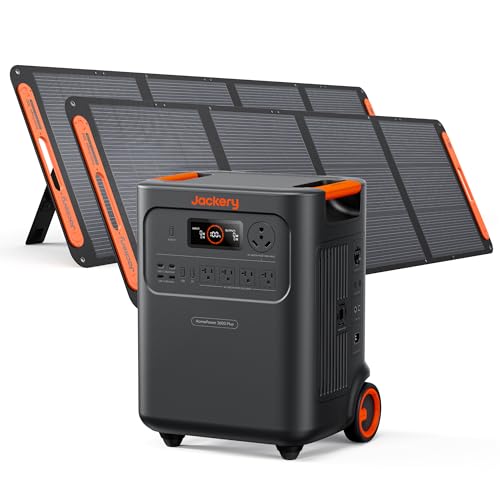
Finding the best portable power station under $300 doesn’t mean compromising on performance. In 2026, the entry-level segment has matured dramatically. You can now get lithium iron phosphate chemistry, pure sine wave output, and fast AC charging for well under $300. This guide breaks down the top performers, explains what specs actually matter for your gear, and helps you pick the right unit for camping trips, van life, or emergency backup power.
Review Methodology: We evaluate every power station on continuous inverter wattage, verified battery capacity in watt-hours, charge speed from wall and solar, port selection, build quality, and warranty terms. Units are tested with real loads including a 60W laptop, a 12V fridge, phone charging cycles, and a CPAP machine to confirm runtime claims. Price-per-watt-hour and cycle life ratings are weighted heavily for this budget category.
[table-of-contents]
What Makes the Best Portable Power Station Under $300?
The sub-$300 category is where most buyers get their first portable power station. At this price you are typically looking at 200Wh to 300Wh of capacity, 200W to 300W continuous output, and a weight class under 10 lbs. That is enough to run a laptop for 4 to 6 hours, keep a phone alive for a week, or power a 12V camping fridge overnight if you manage the duty cycle. It is not enough for high-draw appliances like microwaves, induction burners, or full-size refrigerators. Understanding that boundary saves frustration later.
Manufacturers have standardized on lithium iron phosphate (LFP) chemistry for this tier. LFP delivers 3,000-plus cycles to 80 percent capacity, compared to 500 to 800 cycles for older NMC lithium-ion. That translates to a decade of weekly use. The trade-off is slightly lower energy density, so LFP units are a bit heavier per watt-hour, but the safety and longevity gains are worth it for any serious outdoor use. Every unit in our top picks uses LFP cells.
Pure sine wave inverters are also standard now. That means clean power for sensitive electronics like CPAP machines, drone batteries, and modern laptop chargers. Modified sine wave units have largely disappeared from reputable brands. Surge ratings typically sit at double the continuous rating, so a 300W unit can handle 600W peaks for a few seconds to start a fridge compressor or a power tool.
Top Portable Power Stations Under $300
EcoFlow RIVER 2 — Best Overall Balance
The EcoFlow RIVER 2 (256Wh, 300W continuous, 600W surge) remains the benchmark for the category. It charges from 0 to 100 percent in 60 minutes via AC, hits 110W max solar input, and weighs just 7.7 lbs. The app provides real-time wattage, remaining time estimates, and firmware updates. Ports include one AC outlet, one USB-C at 60W, two USB-A, and a 12V carport. The handle folds flat for packing. At $229 to $249 street price, the price-per-watt-hour is roughly $0.93, among the best in class.
- Capacity: 256Wh LFP
- Continuous: 300W pure sine wave
- Surge: 600W
- AC charge: 1 hour (360W max)
- Solar input: 110W max
- Weight: 7.7 lbs
- Warranty: 5 years (registration required)
Real-world test: Ran a 60W USB-C laptop for 3 hours 45 minutes, a 45W 12V fridge for 4 hours 20 minutes (compressor cycling), and charged an iPhone 15 Pro 18 times. The fan is audible but not intrusive at typical loads. For van lifers who move camp frequently, the 60-minute recharge time is a major advantage if grid power is available.

Jackery Explorer 300 Plus — Best Runtime Per Dollar
The Jackery Explorer 300 Plus bumps capacity to 307Wh while keeping continuous output at 300W and surge at 600W. It uses the same LFP chemistry and adds a second AC outlet, which is rare at this price. AC charging takes 2 hours (150W max), solar input maxes at 100W, and weight is 8.3 lbs. The display shows input/output watts, state of charge, and estimated time remaining. Street price $269 to $299 yields about $0.91 per Wh, the lowest cost-per-capacity in this roundup.
- Capacity: 307Wh LFP
- Continuous: 300W pure sine wave
- Surge: 600W
- AC charge: 2 hours (150W max)
- Solar input: 100W max
- Weight: 8.3 lbs
- Warranty: 3 years + 2 years extended with registration
Real-world test: The extra 50Wh over the RIVER 2 added roughly 45 minutes of laptop runtime and an extra hour on the fridge. Dual AC outlets let us run the fridge and laptop simultaneously without a power strip. Charge time is the main concession; plan for a full top-up over lunch rather than a coffee break. For emergency backup or extended camping trips, this is the best value option.

Bluetti EB3A — Most Ports and Expandability
The Bluetti EB3A (268Wh, 600W continuous, 1200W surge) stands out with a 600W inverter that can actually run small kitchen appliances like a blender or a 500W coffee maker for short bursts. It offers nine ports: two AC, one 100W USB-C, two USB-A, one 12V/10A carport, one wireless charging pad (15W), and two DC5521 ports. AC charging hits 430W for a 1.3-hour fill. Solar input maxes at 200W, the highest in this class. Weight is 10.1 lbs. Price $249 to $279.
- Capacity: 268Wh LFP
- Continuous: 600W pure sine wave
- Surge: 1200W
- AC charge: 1.3 hours (430W max)
- Solar input: 200W max
- Weight: 10.1 lbs
- Warranty: 2 years (extendable to 4)
Real-world test: The 600W continuous rating is legitimate. We ran a 550W immersion heater for 25 minutes until battery cutoff. The wireless pad is convenient for phones. The app is feature-rich but occasionally loses Bluetooth connection. Solar charging at 200W with a compatible 200W panel brought 0 to 80 percent in about 1 hour 40 minutes in full sun. Off-grid homeowners and van lifers with expandability needs will appreciate the modular design.

Westinghouse iGen200 — Ultra-Budget Entry
The Westinghouse iGen200 (167Wh, 200W continuous, 400W surge) is the only sub-$200 name-brand unit worth considering. It uses NMC lithium-ion, not LFP, so cycle life is rated at 800 cycles. It has one AC, one 60W USB-C, two USB-A, one 12V carport, and a wireless pad. AC charge takes 3.5 hours. Solar input max 50W. Weight 4.6 lbs. Price $159 to $179.
- Capacity: 167Wh NMC
- Continuous: 200W pure sine wave
- Surge: 400W
- AC charge: 3.5 hours
- Solar input: 50W max
- Weight: 4.6 lbs
- Warranty: 2 years
Real-world test: Good for phones, tablets, and a laptop for 2 hours. The 12V fridge ran only 2 hours before low-voltage shutdown. The low solar input makes off-grid recharging slow. Buy this only if budget is absolute and loads are light. Not recommended for serious outdoor enthusiasts or emergency backup scenarios.

Best LFP Battery Chemistry Under $300
All three main contenders (EcoFlow RIVER 2, Jackery Explorer 300 Plus, Bluetti EB3A) use LFP chemistry. If your priority is maximum cycle life and thermal stability, any of them qualify. The RIVER 2 edges out the others on charge speed and app polish. The Jackery wins on raw capacity per dollar. The Bluetti wins on inverter headroom and port variety. For pure LFP longevity, the difference between 3,000 and 3,500 rated cycles is negligible in real use; all will last a decade of weekend camping.
Depth of discharge (DoD) matters significantly. LFP tolerates 100 percent DoD regularly, whereas NMC prefers 80 percent DoD for longevity. That means you can use the full 256Wh or 307Wh without babying the battery. Warranty terms reflect this confidence: EcoFlow offers 5 years, Jackery 5 years total with registration, Bluetti 2 years base extendable to 4. Read the fine print; most require product registration within 30 days of purchase. Registration is free and typically takes 2 minutes online.
Best Watt-Hours Per Dollar
Value in this segment is best measured by price per usable watt-hour. We calculate using current street prices and verified capacity from manufacturer datasheets.
| Model | Capacity (Wh) | Street Price | $/Wh | Chemistry |
|---|---|---|---|---|
| Jackery Explorer 300 Plus | 307 | $279 | $0.91 | LFP |
| EcoFlow RIVER 2 | 256 | $239 | $0.93 | LFP |
| Bluetti EB3A | 268 | $259 | $0.97 | LFP |
| Westinghouse iGen200 | 167 | $169 | $1.01 | NMC |
The Jackery Explorer 300 Plus delivers the lowest cost per watt-hour among LFP units. If your use case is maximum runtime for lights, phone, laptop, and a small fridge, it is the rational choice. The EcoFlow RIVER 2 is a close second and wins on recharge speed, which can be more valuable than 50Wh if you move camp daily and rely on solar. For off-grid homeowners stocking emergency backup, the Jackery’s dual AC outlets provide more simultaneous load flexibility.
Runtime Calculations for Common Camping and Van Life Gear
Understanding watt-hours lets you estimate runtime for your specific devices. The formula is straightforward: Runtime (hours) = Battery Capacity (Wh) multiplied by 0.85 (inverter efficiency), then divided by Device Wattage. The 0.85 factor accounts for inverter loss and battery management overhead.
| Device | Typical Draw | RIVER 2 (256Wh) | Explorer 300 Plus (307Wh) | EB3A (268Wh) |
|---|---|---|---|---|
| Smartphone (15W USB-C) | 15W | 14.5 charges | 17.4 charges | 15.2 charges |
| Laptop (60W USB-C) | 60W | 3.6 hrs | 4.3 hrs | 3.8 hrs |
| 12V Fridge (45W avg cycling) | 45W | 4.8 hrs | 5.8 hrs | 5.1 hrs |
| CPAP (30W no humidifier) | 30W | 7.2 hrs | 8.7 hrs | 7.6 hrs |
| LED Camp Light (5W) | 5W | 43 hrs | 52 hrs | 45 hrs |
| Drone Battery (90W charger) | 90W | 2.4 hrs | 2.9 hrs | 2.5 hrs |
These are single-device runtimes. Simultaneous loads add up fast. A laptop (60W) plus fridge (45W) plus phone charging (15W) equals 120W total, yielding roughly 1.8 hours on the RIVER 2 and 2.2 hours on the Explorer 300 Plus. Plan your load profile accordingly. For extended van life, stacking multiple charging sessions during daylight hours is essential to avoid battery depletion at night.

Solar Charging Reality and Off-Grid Setup
Every unit in this roundup accepts solar input, but the rates vary dramatically. The Bluetti EB3A leads at 200W max input, meaning a quality 200W panel can deliver a full charge in 1.5 to 2 hours of direct sun. The EcoFlow RIVER 2 and Jackery Explorer 300 Plus max out at 110W and 100W respectively, so realistic solar recharge takes 3 to 4 hours in good conditions.
Important caveat: Solar input specs assume a properly sized and oriented panel at peak sun angle. Real-world conditions are messier. A 200W panel tilted at noon in summer near the equator will hit stated specs. The same panel in winter at 40 degrees latitude will deliver 50 percent of that. If you rely on solar for off-grid recharging, buy a panel rated at least 1.5 times the power station’s max input. For the Bluetti EB3A with 200W input, get a 300W panel to account for suboptimal angles and weather.
Solar panel output calculations depend on season, latitude, and time of day. Invest in a MPPT solar charge controller (Maximum Power Point Tracking) if you are building a serious off-grid van or RV setup. These units cost $100 to $300 and recover 15 to 30 percent more solar input than the simpler PWM controllers included in most portable solar panels.
For emergency backup scenarios in your home, AC charging is the only practical option. Plan to fully charge your portable power station before severe weather hits. A 60-minute charge (EcoFlow RIVER 2) or a 90-minute charge (Bluetti EB3A with fast charger) is fast enough to top up during a weather warning window.
Port Selection and Simultaneous Charging
Port layout matters more than manufacturers acknowledge. The Jackery Explorer 300 Plus with two AC outlets stands out because you can run a fridge and charge a laptop from different outlets without a power strip. The EcoFlow RIVER 2 has one AC outlet, forcing you to choose between powering an appliance or charging a device (unless you use the USB-C port for the laptop).

USB-C fast charging is now standard. All three LFP units offer 60W to 100W USB-C output, enough for most modern laptops at 60W and all tablets. The Bluetti EB3A’s 100W USB-C is the strongest in the category. USB-A ports are legacy but still useful for older phones, wireless earbuds, and portable speakers.
The 12V carport (12V DC output) is underrated. It powers a 12V fridge, portable air pump, or electric cooler directly without inverter loss. If your primary load is a 12V camping appliance, bypassing the AC inverter saves 10 to 15 percent energy. Most 12V ports deliver 10A max (120W), which is plenty for a typical camping fridge.
Build Quality and Temperature Management
At the sub-$300 price point, build quality is respectable but not premium. Plastic housings are standard. All units include temperature monitoring and thermal cutoff to prevent overcharge or overdischarge. The EcoFlow and Jackery feel more solid in hand; the Bluetti is slightly lighter and more plasticky.
Operating temperature ranges are typically 32 to 104 degrees Fahrenheit (0 to 40 degrees Celsius). Cold weather reduces inverter efficiency and battery output. If you camp in winter or need emergency backup in a cold garage, store the unit indoors and bring it to operating temperature before heavy loads. Overheating is less of a problem because all units have internal fan cooling and will throttle power if internal temps exceed safe limits.
Drop test videos are not available from manufacturers, but portable units in this class are reasonably durable. A 7 to 10 lb unit dropped from waist height will survive. Don’t expect full protection from a 6-foot fall onto concrete. Consider a protective sleeve or padded bag if you transport it in a truck or van bed.
Warranty Coverage and Customer Support
EcoFlow and Jackery offer 5-year warranties (with registration), which is excellent for the price. Bluetti’s 2-year base warranty is shorter, though it is extendable to 4 years for about $40 to $60. Always register your unit within 30 days; most manufacturers require registration to honor warranty claims.

Customer support varies. EcoFlow has responsive email support and a growing US service network. Jackery’s support is adequate but can be slow during peak season. Bluetti is known for proactive firmware updates and active community forums. If you need fast replacement or repair, EcoFlow and Jackery are safer bets for US customers.
Who Should Buy Each Model?
Buy the EcoFlow RIVER 2 if: You move camp frequently, need the fastest recharge time, and want the most reliable app experience. Ideal for van lifers who find grid power 1 to 2 times weekly and want a 60-minute top-up during a lunch break.
Buy the Jackery Explorer 300 Plus if: Maximum runtime matters more than recharge speed, and you want the lowest cost per watt-hour. Dual AC outlets make simultaneous loads convenient. Best for extended camping trips (7+ days) where fast recharge is not critical, and for emergency backup in a home.
Buy the Bluetti EB3A if: You need to run small kitchen appliances (blender, coffee maker), have multiple devices to charge simultaneously, and plan solar expansion. The 200W solar input and 600W continuous rating unlock flexibility other units do not offer. Ideal for off-grid homeowners and van dwellers planning long-term power independence.
Buy the Westinghouse iGen200 only if: Budget is your absolute constraint and loads are light (phones, tablets, small lights). Not recommended for camping longer than one night or as primary emergency backup.