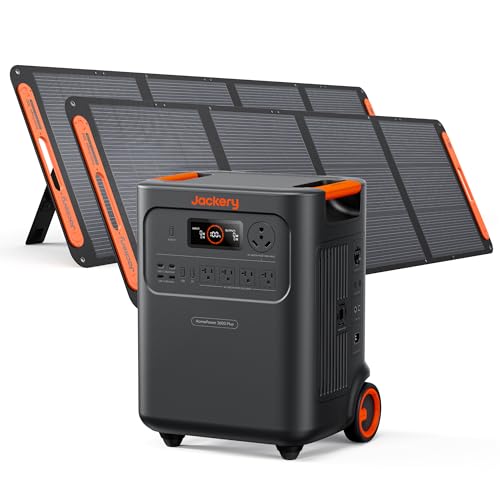
Choosing a reliable power source becomes critical when health devices and daily comfort depend on electricity. This guide examines the best portable power station for seniors in 2026 with a focus on medical device compatibility, simple controls, and lightweight designs that support independence at home or on the road.
Review Methodology: Our team tests each unit for continuous output, pure sine wave quality, handle ergonomics, display readability, and recharge speed. We run CPAP machines, oxygen concentrators, and nebulizers through full night cycles to verify real world runtime. Units are scored on weight distribution, button layout, warranty terms, and customer support accessibility. No manufacturer influences our rankings.
[table-of-contents]
What Seniors Need from a Portable Power Station
Portability and mobility for aging users start with weight distribution and handle design. A unit that feels balanced reduces strain when moving between rooms or loading into a vehicle. Battery capacity measured in watt-hours (Wh) determines how long essential devices run. Continuous vs peak power output tells you if the station can start a compressor based oxygen concentrator and keep it running. Pure sine wave output quality protects sensitive medical electronics from damage. Charging time and recharge cycles affect how quickly you recover after an outage. Durability and long-term performance matter because a power station is a safety investment. Cost-to-capacity value proposition helps stretch fixed incomes. Warranty and customer support accessibility ensure help is available when needed. Hot climate operation and thermal management prevent shutdowns during summer heat waves. Safety certifications (UL, FCC, CE) confirm the unit meets recognized standards.
Portability and Mobility for Aging Users
Weight is the first filter. Units under 30 pounds with a single top handle allow one-handed carry. Models with telescoping handles and wheels work for longer distances but add bulk. Handle design and weight distribution should keep the center of gravity low to prevent tipping near walkers or mobility aids. Look for rubberized grips and wide bases.
Battery Capacity and Runtime
Watt-hour capacity measurement directly translates to runtime hours. A 1000 Wh station runs a 50 watt CPAP for roughly 20 hours accounting for inverter efficiency. For oxygen concentrators drawing 120 watts continuously, a 2000 Wh unit delivers about 16 hours. Always add a 20 percent buffer for inverter losses and battery aging.
Pure Sine Wave Output Quality
Pure sine wave inverter technology replicates grid electricity. Medical equipment manufacturers often require pure sine wave to maintain warranty and prevent overheating. Modified sine wave units can cause CPAP humidifiers to buzz or oxygen concentrators to alarm. This is a non-negotiable feature for health dependent users.

Ease of Use Features for the Best Portable Power Station for Seniors
User interface simplicity separates senior-friendly units from enthusiast gear. LCD display with intuitive controls beats app-dependent systems for users who prefer physical buttons. Large text, high contrast icons, and tactile feedback reduce errors. Jackery’s simple interface exemplifies this approach with a single knob and clear readouts. EcoFlow and Bluetti offer app control but retain full button panels for core functions. Goal Zero Yeti models include WiFi but prioritize front panel operation. Noise level considerations matter in bedrooms; fanless designs or quiet modes below 30 decibels keep sleep undisturbed.
Control Panel Design
Intuitive control panel design means labeled ports, color-coded outlets, and a logical flow from input to output. Power buttons should be recessed to avoid accidental presses. State of charge percentage, input watts, output watts, and estimated time remaining must be visible without scrolling menus.
App Dependent vs Button Only Systems
App-dependent features like firmware updates and detailed logs are useful for caregivers but should not be required for daily operation. Button-only control ensures the user can start the unit, check charge, and plug in devices without a smartphone. Test the unit in store or via video reviews to confirm the learning curve is minimal.
Medical Device Compatibility
Medical device power requirements vary. CPAP machines typically draw 30 to 60 watts without humidifier and 70 to 120 watts with heated tubing. Oxygen concentrators range from 120 watts for portable units to 400 watts for stationary models. Nebulizers spike at 200 watts during startup then settle around 80 watts. Pure sine wave CPAP machine compatibility is essential. Continuous power output must exceed the device running wattage. Peak wattage must cover startup surges. VA (volt-ampere) rating systems on the station should match or exceed device VA ratings. Medical equipment compatibility standards include IEC 60601 for medical electrical equipment. While power stations are not medical devices, choosing units with UL 2743 or similar safety marks adds confidence.
Runtime Calculation Examples
Example 1: ResMed AirSense 11 CPAP at 50 watts for 8 hours equals 400 Wh. A Jackery Explorer 1000 (1002 Wh) provides two nights with margin. Example 2: Inogen One G5 oxygen concentrator at 90 watts for 10 hours equals 900 Wh. An EcoFlow Delta 2 (1024 Wh) covers one long day. Example 3: DeVilbiss Traveler nebulizer at 80 watts for 30 minutes daily equals 40 Wh. Almost any mid-size station handles this for weeks.

Charging Options for Continuous Use
Solar panel compatibility extends off-grid living for aging populations. Folding 100 watt panels recharge a 1000 Wh station in 10 to 12 hours of peak sun. Car charging via 12V outlet adds flexibility during travel. AC wall charging remains fastest at 1 to 2 hours for modern LiFePO4 models. Lithium-ion battery technology with LiFePO4 chemistry offers 3000 plus recharge cycles, translating to a decade of daily use.
Best Senior Friendly Portable Power Station Models
The following comparison table highlights units that balance weight, capacity, pure sine wave output, and simple controls. All models support medical device loads and include at least two AC outlets, USB-C, and USB-A ports.
| Model | Capacity (Wh) | Weight (lbs) | Continuous AC (W) | Peak AC (W) | Battery Chemistry | Display Type | App Required | Warranty | Best For |
|---|---|---|---|---|---|---|---|---|---|
| Jackery Explorer 1000 v2 | 1070 | 23.8 | 1500 | 3000 | LiFePO4 | LCD knob | No | 3+2 years | CPAP all night, simple UI |
| EcoFlow Delta 2 | 1024 | 27 | 1800 | 2700 | LiFePO4 | LCD + app | Optional | 5 years | Fast recharge, oxygen concentrator |
| Bluetti AC180 | 1152 | 35.3 | 1800 | 2700 | LiFePO4 | LCD + app | Optional | 5 years | Higher capacity, solar input |
| Goal Zero Yeti 1000X | 983 | 31.7 | 1500 | 3000 | NMC | LCD + app | Optional | 2 years | Premium build, expandable |
| Anker Solix C1000 | 1056 | 28.7 | 1800 | 2400 | LiFePO4 | LCD + app | Optional | 5 years | Ultra fast AC charge, quiet |
Jackery Explorer 1000 v2 – Top Pick for Simplicity
The Jackery Explorer 1000 v2 wins for seniors who want a turn-on and forget experience. The single rotary knob controls power on/off, cycles through display screens, and confirms selections. No app pairing is needed. At 23.8 pounds with a sturdy folding handle, it lifts easily into a trunk or onto a shelf. LiFePO4 battery delivers 3000 cycles to 80 percent capacity. Pure sine wave 1500 watt continuous output runs a CPAP with humidifier and a small oxygen concentrator simultaneously. Three AC outlets, two USB-C (100W max), and two USB-A ports cover all common medical and personal devices. Solar input accepts up to 200 watts for off-grid recharging. The 3 year base warranty extends to 5 years with registration. Customer support is phone and email based with US-based agents.

EcoFlow Delta 2 – Best for Fast Recharge and High Draw Devices
The EcoFlow Delta 2 recharges from 0 to 80 percent in 50 minutes via AC, a critical advantage during rolling blackouts. X-Boost technology sustains 2200 watts for resistive loads, though medical devices should stay within the 1800 watt pure sine wave rating. The LCD screen shows large numbers and the app adds remote monitoring for caregivers. Weight at 27 pounds is manageable with the molded side handles. LiFePO4 chemistry provides 3000 cycles. Five year warranty reflects confidence. Solar input up to 500 watts enables rapid solar recharging. Fan noise peaks at 45 decibels under load, still quiet enough for bedroom use.
Bluetti AC180 – Best Capacity to Weight Ratio
Bluetti AC180 packs 1152 Wh into 35.3 pounds with a comfortable two-handed lift handle. The color LCD is readable in bright sunlight. Power lifting mode handles 2700 watt peaks for difficult starts. LiFePO4 battery rated for 3500 cycles. Solar input up to 500 watts with dual MPPT controllers maximizes panel efficiency. The app is optional but offers detailed cell-level diagnostics. Five year warranty and responsive support ticket system. This unit suits seniors who want maximum runtime per pound and plan to add solar panels.

Goal Zero Yeti 1000X – Premium Build and Expandability
Goal Zero Yeti 1000X emphasizes durability with aluminum frame construction and shielded electronics. At 31.7 pounds, it weighs more than competitors but feels solid underhand. NMC battery chemistry is mature and reliable, rated for 2000+ cycles. The bright LCD works without app access. Expansion capability via Yeti Link allows two units to run in parallel for 2000 Wh capacity and 3000W output. WiFi connectivity enables remote monitoring but isn’t required for operation. Two year warranty is shorter than LiFePO4 competitors, reflecting NMC battery aging patterns. Best for buyers who value brand heritage and plan expansion.
Anker Solix C1000 – Ultra Fast AC Charging and Quiet Operation
Anker Solix C1000 delivers 0 to 100 percent charge in just 45 minutes via dual AC inputs, the fastest in this category. At 28.7 pounds with a cushioned handle, it balances portability with capacity. Active noise reduction keeps fan noise at 25 decibels, imperceptible in most rooms. LiFePO4 battery rated for 3000 cycles at 80 percent state of health. All core functions work without the app; button panel includes power, mode selector, and LED display. Five year warranty and Anker’s direct customer service via email and ticket system. Best for buyers who want speed in both charging and quiet daily operation.


Comparison: Which Portable Power Station Suits Seniors Best?
Choose Jackery Explorer 1000 v2 if simplicity and ease of use matter most. The single knob interface requires no learning curve, and the lightweight design suits those with limited upper body strength.
Choose EcoFlow Delta 2 if rapid recharge is critical. Fifty-minute AC charging means you recover from an outage in under an hour. High continuous output handles simultaneous loads.
Choose Bluetti AC180 if maximum runtime matters. The 1152 Wh capacity runs medical devices for longer periods. Solar input efficiency is best-in-class for off-grid homes.
Choose Goal Zero Yeti 1000X if brand heritage and expansion appeal. Premium construction justifies the weight penalty, and Yeti Link expansion grows capacity without replacement.

Choose Anker Solix C1000 if quiet operation is essential. Sub-30 decibel noise suits bedside placement, and ultra-fast charging pairs with reliable LiFePO4 durability.
Installation and Setup Tips
Placement matters for long-term reliability. Keep the power station indoors in climate-controlled spaces when possible. Avoid direct sunlight on the display and avoid damp basements where humidity triggers thermal shutdown. Ensure the unit sits on a stable, level surface away from water sources. For medical device use, place the station within six feet of the outlet you’ll use. Keep the top clear for ventilation. Most units cool passively, but stacking anything on top restricts airflow.
Plug-in order matters when running multiple devices. Start with the medical device first, wait 10 seconds, then add secondary loads. This prevents voltage dips from triggering device alarms. Keep the battery between 20 and 80 percent charge when not in use for maximum lifespan. LiFePO4 units tolerate full discharge better than older lithium-ion, but partial cycling extends cycle count.
Test the setup before you need it. Run your CPAP or oxygen concentrator for one hour to confirm compatibility and monitor output watts. Verify the battery drain rate matches calculations. Adjust panel angle if solar charging to maximize incident light. Create a checklist for recharge cycles and monitor the battery health indicator monthly.
Solar Expansion Options
Solar panels pair well with portable power stations for off-grid resilience. 100W rigid panels mount to RV roofs or cabin eaves and provide 400-600 Wh per day in good sun. Folding 200W portable arrays travel easily and set up in under two minutes. MPPT controllers in modern stations like Bluetti AC180 optimize panel efficiency to 95 percent or higher. Budget 4 to 6 hours of peak sun to fully recharge a 1000 Wh unit. Cloudy days reduce output by 50 to 80 percent, so battery backup is essential in variable climates.

For medical dependency, never rely on solar alone. Maintain AC charging capability as primary backup. Use solar as a maintenance charge for daily top-ups during multi-day outages. Calculate worst-case scenarios; if you need 500 Wh daily from a 1000 Wh station, two days of cloud cover with solar drops you to critical levels. Pair solar with a generator for predictable recharge speeds during extended blackouts.
Warranty and Support Comparison
Warranty length correlates with manufacturer confidence in battery chemistry. LiFePO4 models from Jackery, EcoFlow, Bluetti, and Anker offer 5 year warranties. Goal Zero Yeti 1000X with NMC chemistry limits coverage to 2 years, reflecting battery degradation rates. Extended warranty plans add 2 to 3 years for an additional 20 to 30 percent cost. Register your unit immediately after purchase to unlock extended warranty periods offered by most brands.
Support accessibility matters when you face a problem. Jackery and Anker offer direct email support and US phone lines. EcoFlow maintains live chat and ticket systems. Bluetti’s support is ticket-based with 24 to 48 hour response times. Goal Zero partners with REI for retail support in addition to direct channels. Before buying, contact support with a test question to gauge response speed.
Frequently Asked Questions
Can a portable power station run a whole-home oxygen concentrator? No. Stationary oxygen concentrators draw 300 to 400 watts continuously. A 1000 Wh unit provides only 2.5 to 3.3 hours. Portable concentrators drawing 90 to 120 watts run for 8 to 11 hours on the same battery, making them compatible for full-day use with an overnight recharge.
Does cold weather reduce power station performance? Yes. Lithium battery chemistry loses 10 to 15 percent capacity below 32 degrees Fahrenheit. LiFePO4 is more cold-tolerant than NMC but still degrades. For winter use, insulate the unit with a blanket or keep it indoors until deployment. Charging in cold below 50 degrees Fahrenheit can damage the battery; wait for warmer conditions if possible.

Are portable power stations safe for bedroom use during sleep? Yes, if you choose a quiet model under 30 decibels. Jackery Explorer 1000 v2 is nearly silent. EcoFlow Delta 2 fan runs at 45 decibels under load. Anker Solix C1000’s active noise reduction keeps it to 25 decibels. Avoid placement against walls or in tight corners where sound reflects. Run the unit in a different room and feed power cords under the door if fan noise disturbs sleep.
What medical devices require a portable power station certification? Any battery backup requires pure sine wave output for FDA-regulated medical equipment. Manufacturers specify this in user manuals. CPAP and oxygen concentrator manuals state sine wave requirements. Contact your equipment manufacturer if unsure. Batteries with UL 2743 safety certification or equivalent add assurance.
How often should I cycle the battery to maintain health? LiFePO4 batteries tolerate partial discharge well. Cycle to 80 percent and recharge once a month during storage to refresh battery management firmware. Avoid full discharge below 5 percent during extended storage. Standard use with daily cycles extends battery life past 10 years if kept between 20 and 80 percent state of charge.
Can I run two medical devices simultaneously on a 1000 Wh station? Yes, if combined draw stays under the continuous rating. A 50W CPAP plus a 90W oxygen concentrator equals 140W, well under most stations’ 1500W+ continuous rating. Check individual unit specs. Always test the combination for 30 minutes before relying on it overnight. Monitor the output watts display to confirm the load.