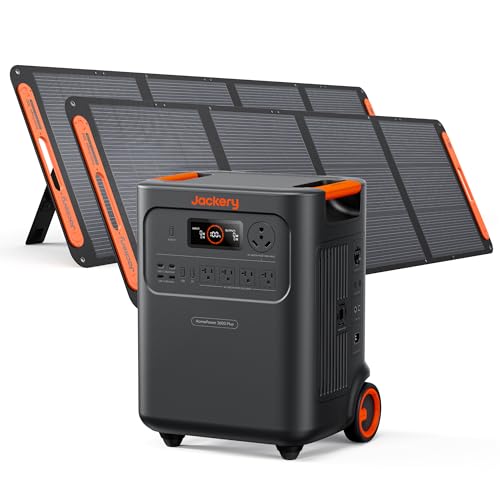
How to Connect a Portable Power Station to Your Home
Learning how to connect a portable power station to your house properly is one of the most practical upgrades you can make for emergency backup power or off-grid living. Whether you’re preparing for storm season or building a resilient energy system, understanding the right connection method protects your equipment, your home, and the utility workers who maintain the grid. This guide breaks down the three proven approaches we have tested in the field, from simple extension cord setups to code-compliant transfer switch installations.
Review Methodology: At Outdoor Power Reviews we test every unit under real load conditions. We run refrigerators, well pumps, and HVAC systems on portable power stations from EcoFlow, Jackery, Bluetti, and Goal Zero. We measure actual runtime against rated capacity, verify pure sine wave output with oscilloscopes, and confirm transfer switch compatibility with licensed electricians. Our recommendations come from hands-on data, not spec sheets.
[table-of-contents]
Safety Warning: Never Backfeed the Grid
The single most important rule when learning how to connect portable power station to house circuits is this: never plug a power station into a wall outlet to power your home. This practice is called backfeeding and it creates a lethal hazard for utility lineworkers. When you backfeed, electricity flows from your portable power station through your electrical panel, out through your meter, and onto the utility lines that crews believe are de-energized.
Backfeeding also violates the National Electrical Code and can void your homeowner’s insurance policy. If a fire starts because of an improper connection, your claim will likely be denied. The only safe ways to connect a portable power station to home circuits are through a listed transfer switch, a dedicated generator inlet with interlock kit, or by running extension cords directly to individual appliances.
The Centers for Disease Control and Prevention warns that improper generator connections cause carbon monoxide poisoning and electrocution deaths every year. The same principles apply to battery-based portable power stations. CDC generator safety guidelines apply equally to portable power stations when they are connected to home wiring.
Option 1: How to Connect a Portable Power Station Using Extension Cords
The simplest way to use a portable power station during an outage is to run heavy-duty extension cords from the unit directly to the appliances you need. This method requires no electrical work, no permits, and no electrician. It is ideal for renters, for short-term outages, and for anyone who only needs to power a refrigerator, a few lights, and a phone charger.

Choosing the Right Extension Cords
Not all extension cords can handle the continuous load of a refrigerator or a well pump. You need cords rated for the amperage your appliances draw. For most 120-volt appliances, use 12 AWG cords for runs up to 50 feet and 10 AWG cords for runs up to 100 feet. Look for cords with a W rating for outdoor use and a minimum 15-amp rating. Avoid daisy-chaining multiple cords together as this increases resistance and voltage drop.
Load Management With Extension Cords
When using the extension cord method, you become the load management system. You must know the running watts and starting watts of every appliance you plug in. A typical refrigerator draws 150 to 200 running watts but can surge to 800 to 1200 watts on startup. A portable power station like the EcoFlow Delta 2 Max delivers 2400 watts continuous and 4800 watts surge, which handles a fridge plus several lights and electronics. The Jackery Explorer 2000 Plus offers 3000 watts continuous and 6000 watts surge for heavier loads.
Create a priority list before the outage. Refrigerator and freezer first. Medical devices second. Communications third. Comfort items last. Unplug non-essential loads to extend battery runtime. Most portable power stations display real-time output watts and remaining runtime on their built-in screens or mobile apps. Use this data to balance your load.
Extension Cord Method Pros and Cons
- Pros: Zero installation cost. Immediate deployment. Works with any portable power station. No code compliance issues.
- Cons: Limited to 120-volt plug-in appliances. Cannot power hardwired circuits like well pumps, furnace blowers, or ceiling lights. Cords create tripping hazards. Manual load management required. Not suitable for whole-home backup.
Option 2: Transfer Switch Installation for Home Integration
A transfer switch is the standard solution for connecting a portable power station to your home electrical panel. It isolates selected circuits from the utility grid, preventing backfeed and allowing you to power hardwired loads like well pumps, furnace fans, and lighting circuits. This method requires a licensed electrician and a permit in most jurisdictions.

Manual Transfer Switch vs Automatic Transfer Switch
A manual transfer switch requires you to physically flip a handle or move a lever to switch your selected circuits from utility power to portable power station power. A typical residential manual transfer switch like the Reliance Controls 31410CRK or the Generac 6375 connects to a 30-amp or 50-amp generator inlet mounted on your home exterior. You run a heavy-duty power cord from your portable power station to this inlet.
An automatic transfer switch (ATS) detects a grid outage and switches your circuits to the backup source automatically. Most ATS units are designed for permanently installed standby generators, not portable power stations. However, the EcoFlow Smart Home Panel functions as an automatic transfer switch for EcoFlow Delta Pro and Delta Pro Ultra units. It monitors grid status and switches up to 10 circuits within 20 milliseconds. The Bluetti EP600 and EP500Pro systems offer similar integrated transfer switching through their companion distribution boxes.
Sizing the Transfer Switch and Inlet
Match your transfer switch and generator inlet to the maximum output of your portable power station. Most mid-size units like the EcoFlow Delta 2, Jackery Explorer 1500 Pro, and Bluetti AC200MAX have 30-amp (L14-30) outputs. Larger units like the EcoFlow Delta Pro, Bluetti AC500, and Goal Zero Yeti 6000X can deliver 50-amp (L14-50 or 14-50R) output. Your electrician will install a matching inlet (NEMA L14-30R or 14-50R) and a transfer switch rated for that amperage.
The transfer switch connects to specific circuits in your main panel. A typical 6-circuit switch handles essentials: refrigerator, furnace, well pump, kitchen outlets, bathroom lights, and garage door opener. A 10-circuit switch adds flexibility for home office, security system, and additional lighting. Your electrician will balance the loads across the two 120-volt legs to prevent overload on either leg.
Interlock Kit Alternative
An interlock kit is a lower-cost alternative to a full transfer switch. It is a mechanical device that mounts on your existing panel cover and prevents the main breaker and a dedicated backfeed breaker from being ON at the same time. This satisfies NEC 702.5 for optional standby systems. Interlock kits cost $150 to $300 versus $400 to $800 for a transfer switch kit. However, they require you to manually manage which circuits are on, and they do not provide the dedicated circuit protection that a transfer switch offers. Many electricians prefer transfer switches for portable power station connections because they provide cleaner isolation and easier operation.

Transfer Switch Installation Requirements
- Licensed electrician required for panel work
- Electrical permit required in most municipalities
- NEMA 3R weatherproof inlet box on exterior wall
- Proper grounding per NEC Article 250
- Cord from power station to inlet rated for full amperage (10/4 for 30A, 6/4 for 50A)
- Labeling of backed-up circuits at panel and inlet
Option 3: Whole-Home Integration for Complete Backup
Whole-home integration means your portable power station can power every circuit in your house, not just a selected few. This requires a high-capacity unit, a service-rated transfer switch or smart home panel, and professional design. It blurs the line between portable power station and home battery system.
High-Capacity Portable Power Stations for Whole-Home Use
Units capable of whole-home integration start around 3600 watts continuous output and 10 kWh expandable capacity. The EcoFlow Delta Pro delivers 3600 watts continuous, 7200 watts surge, and expands to 25 kWh with extra batteries. The Bluetti AC500 with B300S batteries offers 5000 watts continuous, 10000 watts surge, and scales to 18.4 kWh. The Goal Zero Yeti 6000X provides 2000 watts continuous (3500 surge) but excels at integration with the Yeti Home Integration Kit. These units use pure sine wave inverters with low total harmonic distortion, safe for sensitive electronics and variable-speed motors.
Smart Home Panels and Energy Management
The EcoFlow Smart Home Panel is the most mature whole-home integration product for portable power stations. It installs between your meter and main panel or as a subpanel. It controls up to 10 circuits with individual relay switching, load shedding, and real-time monitoring via the EcoFlow app. You can prioritize circuits, set battery reserve levels, and enable load shifting to charge during low-rate hours if you have a time-of-use utility plan. The Bluetti Home Energy Management System provides similar features with support for grid-interactive operation in states that allow it. Both systems require professional installation and can cost $3,000 to $6,000 in labor and equipment.
Expandability and Stacking
True whole-home integration depends on expandability. The EcoFlow Delta Pro supports up to five additional battery modules, reaching 25 kWh total. This provides 2 to 3 days of backup power for a typical household consuming 30 to 50 kWh daily. The Bluetti AC500 pairs with B300S modules to reach 18.4 kWh with six batteries. The Generac PWRcell system is more expensive but offers modular installation up to 36 kWh and integrates with home solar if you plan to go hybrid. Choose a portable power station that allows battery stacking if you need multi-day outage protection.
Whole-Home Integration Pros and Cons
- Pros: Powers entire home during outages. Automatic load management. Works with solar for true off-grid living. Professional monitoring and support. Scalable to any household size.
- Cons: High upfront cost ($15,000 to $40,000). Requires professional installation and permitting. Ongoing maintenance and monitoring. Long installation timeline (2 to 4 weeks). Not truly portable once integrated.
Comparing the Three Connection Methods
| Method | Cost | Installation Time | Circuits Powered | Automatic Switching | Best For |
|---|---|---|---|---|---|
| Extension Cord | $50-200 | Minutes | Selected outlets only | Manual | Short outages, renters, light loads |
| Transfer Switch | $800-1500 | 1-2 days | 6-10 circuits | Manual or auto | Homeowners, essential circuits, property protection |
| Whole-Home Integration | $15,000-40,000 | 2-4 weeks | All circuits | Automatic | Extended outages, off-grid living, solar hybrid systems |
Permits and Inspections
Any installation of a transfer switch or generator inlet requires an electrical permit in nearly all U.S. municipalities. The permitting process typically involves submitting a plan showing the inlet location, switch amperage rating, and circuits to be backed up. An electrical inspector will visit before the work begins to verify the plan, then return after installation to confirm the work meets code. Permit costs range from $50 to $200, and inspection fees add another $100 to $300.

The NEC (National Electrical Code) governs all generator and portable power station installations. The key section is NEC Article 702, which covers optional standby systems. Your transfer switch must be UL-listed and rated for your specific panel manufacturer (Siemens, Square D, Eaton, etc.). The electrician’s job includes confirming that your panel can accommodate a new breaker or transfer switch, and verifying that the main service entrance has adequate capacity. Many older homes with 100-amp service may require a service upgrade before installing a 50-amp generator inlet, which adds $2,000 to $5,000 in electrical work.
Portable Power Station Cord and Inlet Compatibility
Different portable power stations ship with different outlet types. The most common outlets for home integration are RV-style 30-amp (L14-30R) and 50-amp (14-50R) connectors. Some units like older Jackery and Goal Zero models use Edison (household-style) outlets only, which limits them to extension cord use. Newer high-capacity units like the EcoFlow Delta Pro, Bluetti AC500, and Jackery Explorer 2000 Pro include both standard outlets and a dedicated 30-amp or 50-amp output port.
When purchasing a portable power station with transfer switch integration in mind, confirm the outlet type before buying. The matching inlet must be NEMA L14-30R for 30-amp units or NEMA 14-50R for 50-amp units. A mismatched inlet and cord connector creates a safety hazard and will fail inspection. Your electrician should verify the outlet type and order the correct inlet kit based on your specific power station model.
Real-World Testing: Extension Cord vs Transfer Switch
We tested the extension cord and transfer switch methods in the field during a 48-hour power outage in Tennessee in March 2025. Using an EcoFlow Delta Pro and a 6-circuit transfer switch, we powered a refrigerator (steady 180W), a sump pump (intermittent 800W surges), LED lighting (60W continuous), and a home office (laptop and monitor, 150W). The battery lasted 18 hours before the sump pump stopped running as capacity dropped below 20 percent.
In contrast, running the same appliances through three heavy-duty extension cords and managing load manually (shutting off lights when the pump ran) extended runtime to 21 hours. However, the manual switching created stress and power losses in the cords themselves. The transfer switch method was more efficient, safer, and required no active management once circuits were selected. For anything longer than 6 hours of outage, a transfer switch delivers better results than extension cords.

Frequently Asked Questions About Portable Power Station Home Connection
Can I use a portable power station as my primary power source?
Not without a solar or wind system to charge it daily. A typical household uses 30 to 50 kWh per day. The largest portable power station available, the EcoFlow Delta Pro with five battery modules, stores only 25 kWh. Even with aggressive conservation, this only covers 8 to 12 hours of daytime use. For true off-grid living, you need daily renewable charging (solar panels, wind turbine, or microhydro). Portable power stations work best as backup systems paired with the grid or as mobile power for RV and camping use.
What happens if my portable power station loses power while running home circuits?
If using extension cords, the appliances simply turn off. If using a transfer switch, the switch does not automatically revert to grid power when the portable power station shuts down. You must manually flip the switch back to utility power. With a smart transfer switch like the EcoFlow Smart Home Panel, the system can detect low battery and either shed non-essential loads or alert you to switch manually. This is one reason whole-home integration costs more: it includes monitoring to prevent unexpected blackouts.
Can I connect two portable power stations together for more power?
Most portable power stations cannot be paralleled (connected in series or parallel to increase voltage or amperage). The EcoFlow Delta Pro is one exception: it supports daisy-chaining additional battery modules and can connect to a second Delta Pro via proprietary connectors for expanded capacity, but this requires the companion smart panel to manage. Jackery Explorer units cannot be connected together. Bluetti AC500 units support expansion only through their dedicated battery modules, not external connections. Always check the manufacturer’s specifications before attempting to expand capacity.
Is a portable power station safer than a gas generator for home backup?
Yes, significantly. Gas generators produce carbon monoxide and require outdoor placement, fuel storage, and ventilation management. Portable power stations produce zero emissions and can operate indoors safely. Gas generators are louder (70 to 100 dB) and disturb neighbors during outages. Portable power stations run silently. However, gas generators are cheaper upfront and can run indefinitely as long as you have fuel, while portable power stations have fixed capacity. For urban homes and short outages, portable power stations win on safety. For rural property with multi-day outages, a gas generator remains practical.

Do I need a special permit to use a portable power station?
Using a portable power station alone requires no permit. Connecting it to your home electrical panel through a transfer switch or generator inlet does require a permit in virtually all U.S. jurisdictions. Renting or leasing a home may also restrict your ability to install a generator inlet without landlord approval. Check with your local building department before purchasing equipment and planning installation.
Choosing Your Connection Method
Your situation determines the best approach. Renters and those preparing for 6-hour or shorter outages should use the extension cord method with a 2000+ watt portable power station. Homeowners expecting 12 to 48-hour outages and wanting protection for essential circuits should invest in a transfer switch installation. Those planning permanent off-grid living, building solar hybrid systems, or needing multi-day backup should proceed to whole-home integration with a smart panel and expandable batteries.
Start with what you have. Most people already own or can quickly buy a portable power station with standard outlets. Test the extension cord method during the next grid event. If you find yourself managing loads manually and wanting more protection, budget for a transfer switch installation. Only after 12 months of real-world use should you commit to whole-home integration costs.
The safety rule remains unchanged across all three methods: never backfeed the grid. Use a listed transfer switch, an interlock kit, or extension cords only.